Elderly patients are often afflicted with the onset of a convergent strabismus as a sign of aging, without any other neurologic disorder. Unfortunately, physicians and even ophthalmologists are generally unaware of this fact. Consequently, such patients fail to find timely help for their double vision. In addition, there are other geriatric alterations (such as cataracts, glaucoma and age-related maculopathy), which are connected with binocularity disorders but do not always result in double vision. These masked diplopia are only perceptible as the closing of one eye and the patient’s complaint of seeing clouds. Erroneous diagnoses have a dramatic outcome for many elderly people whose ability to read is vitally important for their quality of life. Studies on this topic and suggestions for improving the patients’ situation are contained in this book. The book also covers intractable diplopia, or “horror fusionis”, which is particularly difficult to understand. Examinations of the micromotility of the eyes could explain some of the puzzling observations. Although eye muscle palsies are generally outside the scope of this book’s focus, connections between neuro-ophthalmology (e.g. in Parkinson’s disease) and reading problems due to convergence insufficiency are discussed. Finally, this book examines what happens in adulthood to the numerous patients whose squints were operated on during childhood. Many of these patients later suffer problems such as double vision, which may be misinterpreted as eye muscle palsy.
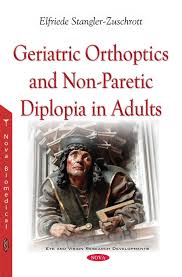

Geriatric Orthoptics and Non-Paretic Diplopia in Adults
 Post-Acute and Long Term Geriatric Care Clinical Advisor
 Fractures in the Elderly: A Guide to Practical Management, Second Edition
Geriatric Orthoptics and Non-Paretic Diplopia in Adults
Original price was: $130.00.$4.99Current price is: $4.99.
-96%