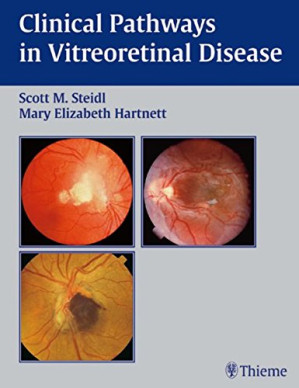


The Algorithmic Retina: Clinical Pathways in Vitreoretinal Disease
In the high-stakes environment of a retina clinic, hesitation can cost a patient their central vision. The clinician requires instantaneous, evidence-based decision trees. Clinical Pathways in Vitreoretinal Disease is a brutally efficient, protocol-driven masterwork that strips away lengthy academic prose in favor of direct, actionable flowcharts. This volume provides the exact algorithmic blueprints required to triage and treat complex posterior segment pathology.
Mastering the “If/Then” Scenario
The core philosophy of this text is systematic execution. The authors aggressively format complex diseases into binary decision points. It dictates exactly how to manage an epiretinal membrane: *If* visual acuity is better than 20/40 and OCT shows minimal distortion, *Then* observe; *If* visual acuity drops below 20/40 or the patient complains of severe metamorphopsia (distortion), *Then* proceed immediately to pars plana vitrectomy with membrane peeling.
Navigating the Injection Protocol
The book provides a masterclass in anti-VEGF management. It dictates the exact clinical pathways for treating wet macular degeneration. It rigorously details the transition from a strict monthly injection protocol to a “Treat and Extend” regimen, providing the exact mathematical algorithms for safely extending the interval between injections without allowing the bleeding to recur.
Frequently Asked Questions (FAQs)
Is this a massive textbook full of dense pathophysiology?
No, it is an aggressively structured *clinical manual* designed to provide rapid, algorithm-based treatment plans for busy practitioners.
Who is the primary audience?
It is the absolute, mandatory rapid-reference for Retina Specialists, Medical Retina Fellows, and Comprehensive Ophthalmologists.