
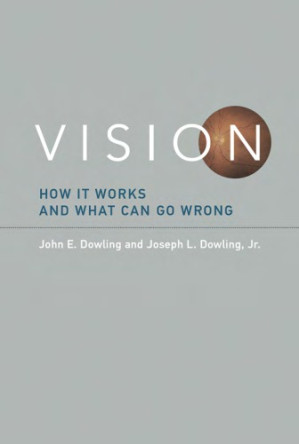


The Ophthalmologic Blueprint: Vision: How It Works and What Can Go Wrong
The human visual system is arguably the most complex sensory apparatus in biology, transforming photons of light into electrochemical signals that the brain decodes into three-dimensional perception. When this delicate system fails, the resulting blindness is catastrophic. Vision: How It Works and What Can Go Wrong is a brilliantly accessible, highly integrated masterwork that bridges the gap between the complex physics of optics and the clinical reality of ocular disease. This volume provides the exact blueprints required to understand the mechanisms of sight.
Mastering Ocular Neurobiology
The core philosophy of this text is understanding the physiological cascade. The authors aggressively detail the phototransduction pathway within the retina. It dictates exactly how a photon strikes a rhodopsin molecule in a rod cell, triggering a massive enzymatic cascade that ultimately hyperpolarizes the cell and sends a visual signal down the optic nerve to the occipital cortex.
Navigating Refractive and Retinal Error
The book provides a masterclass in visual pathology. It dictates the exact mechanical and biological pathways of blindness. It rigorously details how the physical elongation of the eyeball (myopia or nearsightedness) causes light to focus in front of the retina, and how age-related macular degeneration (AMD) destroys the specific central photoreceptors required for high-resolution vision.
Frequently Asked Questions (FAQs)
Is this a highly complex surgical atlas for performing eye surgery?
No, it is a comprehensive, deeply educational guide focused on the *science, physiology, and pathology* of vision, written to be accessible to a wide medical audience.
Who is the primary audience?
It is an essential, foundational text for Optometrists, Medical Students, Junior Ophthalmology Residents, and Vision Researchers.


