
The Anatomical Navigator: Operative Approaches in Orthopedic Surgery and Traumatology
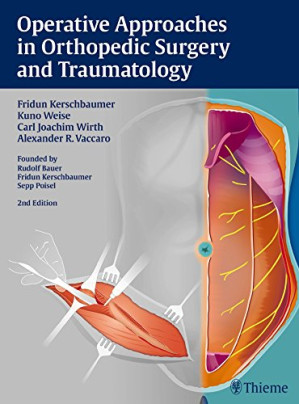
The single most dangerous part of any orthopedic operation is getting to the bone. A poorly executed surgical approach will destroy muscles, sever critical nerves, and permanently compromise the blood supply, rendering the actual bone fixation irrelevant. Operative Approaches in Orthopedic Surgery and Traumatology is a fiercely detailed, heavily illustrated anatomical atlas dictating the absolute safest pathways through the human body. This volume provides the exact blueprints required to confidently expose any fracture or joint while respecting the delicate soft tissue envelope.
Mastering the Internervous Plane
The core philosophy of this text is that every approach must exploit the natural anatomical fault lines. The authors aggressively detail the concept of the internervous plane. It dictates exactly how to execute the anterior approach to the hip by splitting the gap between the sartorius (femoral nerve) and the tensor fasciae latae (superior gluteal nerve), allowing the surgeon to expose the joint without denervating a single muscle fiber.
Navigating High-Risk Exposures
The book provides a masterclass in avoiding catastrophe. It dictates the exact surgical pathways for the most terrifying exposures in traumatology. It rigorously details the extensile posterior approach to the humerus, providing exact millimeter measurements to safely identify, isolate, and protect the radial nerve as it spirals around the bone before applying a plate.
Frequently Asked Questions (FAQs)
Does this book teach you how to put the screws in the bone?
No, it teaches you how to *reach* the bone safely. It is an atlas of surgical approaches, not a manual of internal fixation techniques.
Who is the primary audience?
It is the absolute, mandatory anatomical atlas for Orthopedic Residents, Traumatologists, and any surgeon operating on the musculoskeletal system.


