The Digital Anatomy: Computational Biomechanics of the Musculoskeletal System
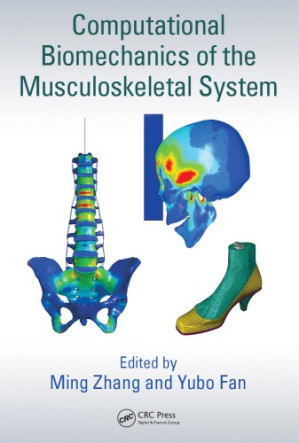
Before a new titanium hip prosthesis is ever implanted into a human patient, it must undergo thousands of hours of rigorous testing. However, physical testing is slow and expensive. The modern vanguard of orthopedic research relies on complex mathematical models and computer simulations to predict how an implant will perform inside the human body. Computational Biomechanics of the Musculoskeletal System is a fiercely technical, highly advanced engineering manual detailing the precise architecture of these simulations. This volume provides the exact blueprints required to build digital models of bones, joints, and surgical constructs.
Mastering Finite Element Analysis (FEA)
The core philosophy of this text is the mathematical deconstruction of anatomy. The authors aggressively detail the use of Finite Element Analysis (FEA). It dictates exactly how to convert a patient’s CT scan into a three-dimensional digital mesh, assign specific material properties (elastic modulus) to cortical and cancellous bone, and simulate the immense physiological loads of walking or jumping to identify areas of catastrophic stress concentration.
Navigating Musculoskeletal Modeling
The book provides a masterclass in dynamic simulation. It dictates the exact computational pathways for modeling complex joint kinematics using rigid-body dynamics (e.g., using software like OpenSim). It rigorously details how researchers simulate the muscle forces required to stabilize the spine or the knee, allowing them to predict the biomechanical consequences of a surgical tendon transfer or a high tibial osteotomy before cutting the patient.
Frequently Asked Questions (FAQs)
Is this a book for a practicing orthopedic surgeon?
Generally, no. This is a highly specialized text focused on advanced mathematics, physics, and computer programming used in research and development.
Who is the primary audience?
It is the absolute, mandatory reference for Biomechanical Engineers, Orthopedic Implant Designers, Kinesiologists, and Academic Orthopedic Researchers.