The Joint Preservation Directive: Early Hip Disorders
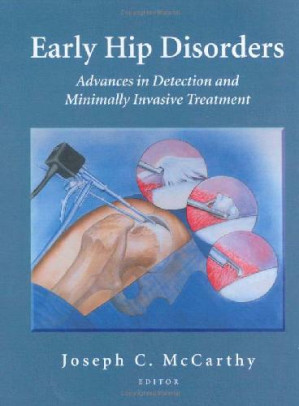
Once a hip joint reaches end-stage osteoarthritis, the clinical pathway is simple: replace it. However, identifying and surgically correcting the biomechanical abnormalities that *cause* that osteoarthritis—before the cartilage is irreversibly destroyed—is one of the most complex challenges in modern orthopedics. Early Hip Disorders is a fiercely analytical, highly advanced surgical manual dedicated entirely to joint preservation. This volume provides the exact blueprints required by specialized hip surgeons to intercept pathology and halt the progression of degenerative joint disease.
Mastering Femoroacetabular Impingement (FAI) and Dysplasia
The core philosophy of this text is proactive biomechanical correction. The authors aggressively detail the pathomorphology of the hip. It dictates exactly how to diagnose and surgically manage Cam and Pincer lesions in FAI, utilizing both arthroscopic and open surgical dislocation techniques. It provides rigorous, step-by-step algorithms for performing periacetabular osteotomies (PAO) to reorient the dysplastic socket, maximizing articular coverage.
Navigating the Pre-Arthritic Joint
The book provides a masterclass in interpreting complex imaging. It dictates the exact radiological pathways (alpha angles, lateral center-edge angles, MRI arthrography) required to detect subtle chondral damage and labral tears. It heavily emphasizes the critical threshold: determining exactly when a joint is too severely degenerated for a preservation procedure, necessitating arthroplasty.
Frequently Asked Questions (FAQs)
Does this book teach how to perform a Total Hip Replacement?
No. Its entire focus is on *avoiding* a total hip replacement through early diagnosis and corrective osteotomies/arthroscopy in the young, active patient.
Who is the primary audience?
It is the absolute, mandatory surgical atlas for Orthopedic Hip Preservation Specialists, Sports Medicine Surgeons, and advanced Orthopedic Fellows.