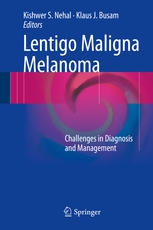

The Stealth Skin Cancer: Lentigo Maligna Melanoma: Challenges in Diagnosis and Management
Unlike classic nodular melanomas that are easily identified as raised, dark, and dangerous, Lentigo Maligna Melanoma (LMM) is insidious. It presents as a slow-growing, flat, often ill-defined pigmented patch on sun-damaged skin (typically the face of the elderly). Because it mimics benign sun spots, it is frequently misdiagnosed, leading to devastating, deeply invasive cancers. Lentigo Maligna Melanoma: Challenges in Diagnosis and Management is the definitive, fiercely clinical text dedicated entirely to this deceptive malignancy. This volume provides the exact blueprints required by dermatologists and surgeons to identify the lesion early, biopsy it correctly, and achieve clear surgical margins on cosmetically sensitive areas.
Mastering Clinical and Dermoscopic Identification
The core philosophy of this text is early detection through advanced visualization. The authors aggressively detail the dermoscopic features of LMM, dictating exactly how to identify the classic “rhomboidal structures,” “annular-granular patterns,” and asymmetric follicular pigmentation that differentiate it from a benign solar lentigo or early seborrheic keratosis. It provides the crucial framework for understanding the profound risk of sampling error when performing small punch biopsies on these large, heterogeneous lesions.
Navigating Surgical Margins and Non-Surgical Treatments
The book provides a masterclass in facial oncology. It dictates the exact clinical pathways for utilizing staged surgical excisions (such as Mohs micrographic surgery or the “slow Mohs” technique) to ensure complete removal while preserving vital facial structures. It provides exhaustive reviews of non-surgical management strategies—including topical imiquimod and definitive radiation therapy—for patients who are poor surgical candidates or refuse extensive facial surgery.
Frequently Asked Questions (FAQs)
Does this book address the pathology of the lesion?
Yes, it rigorously details the histological challenges, specifically the difficulty in distinguishing severe atypical melanocytic hyperplasia from true melanoma in situ on sun-damaged skin.
Who is the primary audience?
It is the absolute, mandatory clinical guide for Dermatologists, Mohs Surgeons, Plastic Surgeons, and Dermatopathologists.