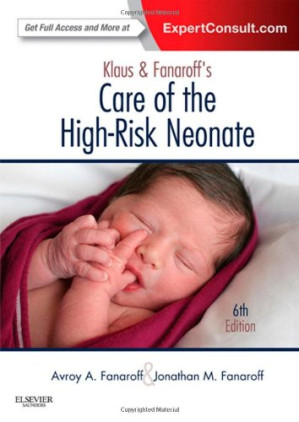
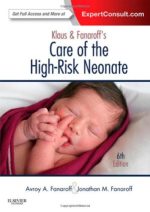

NICU Excellence: Klaus and Fanaroff’s Care of the High-Risk Neonate: Expert Consult – 6th Edition
The Neonatal Intensive Care Unit (NICU) is the frontier of medical viability. Managing the extremely premature infant or the critically ill full-term neonate requires more than basic clinical skills; it requires an uncompromising understanding of rapidly changing, complex physiology. Klaus and Fanaroff’s Care of the High-Risk Neonate (6th Edition) is the definitive, fiercely authoritative masterwork designed to guide clinicians through these life-or-death scenarios. This volume provides the exact, evidence-based protocols and deep pathophysiological insights required to manage the most fragile patients in medicine.
Mastering the Management of the Critically Ill Infant
The core philosophy of this text is that effective intervention requires absolute mastery of neonatal pathophysiology. The authors aggressively detail the transition from fetal to neonatal life. They dictate exactly how prematurity disrupts the development of every organ system, providing the deep scientific bedrock necessary for anticipating and managing catastrophic complications like Respiratory Distress Syndrome (RDS) and Intraventricular Hemorrhage (IVH).
Navigating Extreme Prematurity and Complex Congenital Anomalies
The book provides a masterclass in high-stakes clinical management. It dictates the exact algorithms for managing the extremely low birth weight (ELBW) infant. It provides exhaustive, detailed guidelines on the recognition and initial stabilization of severe congenital anomalies—from congenital diaphragmatic hernias to complex cyanotic heart lesions—before surgical intervention can occur.
Managing Advanced Ventilatory and Nutritional Support
This is a fiercely practical guide to life support. The authors provide rigid protocols for respiratory management. The text dictates exactly how to execute complex ventilatory strategies, including high-frequency oscillatory ventilation (HFOV) and inhaled nitric oxide therapy. It also provides the critical, math-intensive formulas required to safely manage Total Parenteral Nutrition (TPN) and aggressive enteral feeding to prevent Necrotizing Enterocolitis (NEC).
Integrating Pathophysiology with Evidence-Based Protocols
The final value of this reference is its commitment to data-driven care. The text does not rely on tradition; it dictates the latest evidence-based practices from global NICU research. It ensures the clinician is operating at the vanguard of neonatal science, capable of interpreting new data and integrating it safely into bedside practice.
Frequently Asked Questions (FAQs)
Does this textbook cover the ethical dilemmas in neonatology?
Yes, it features critical sections on navigating the complex ethical challenges of the NICU, dictating frameworks for discussing limits of viability, palliative care, and end-of-life decisions with devastated parents.
Are there specific guidelines for neonatal follow-up?
Absolutely. It provides explicit protocols for the long-term neurodevelopmental follow-up of the high-risk neonate, ensuring care continues long after discharge from the NICU.
Who is the primary audience?
It is the absolute, mandatory masterwork for Neonatologists, Neonatal-Perinatal Fellows, NICU Nurses, and Advanced Practice Neonatal Nurses.
Conclusion
Klaus and Fanaroff’s Care of the High-Risk Neonate proves that saving the smallest lives requires the deepest knowledge and the most rigorous application of science. It is the indispensable bedrock of neonatal intensive care. By mastering the complex physiology, the advanced ventilatory strategies, and the evidence-based protocols detailed in this monumental volume, specialists can push the boundaries of viability and protect the developing brain.