
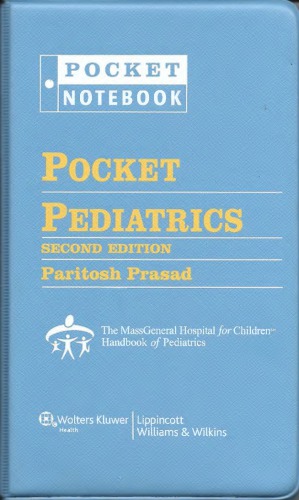



Institutional Excellence: Pocket Pediatrics: The Massachusetts General Hospital for Children Handbook
The transition from the classroom to the pediatric ward is notoriously steep. Junior doctors are suddenly faced with real-time decision-making, complex pharmacological calculations, and the intense pressure of acute care. To survive and excel, they require immediate access to institutional-grade, battle-tested protocols. Pocket Pediatrics: The Massachusetts General Hospital for Children Handbook (Second Edition) provides exactly that. This volume delivers the rigorous, uncompromising clinical guidelines developed by one of the world’s premier pediatric institutions directly into the pocket of the frontline clinician.
Mastering the MGH Approach to Pediatric Care
The core philosophy of this text is actionable, evidence-based efficiency. The authors aggressively distill the vast clinical knowledge of the MGH faculty into a highly structured, bulleted format. They dictate exactly how the experts at MGH approach common and complex pediatric presentations, ensuring that the junior doctor is utilizing the same rigorous, standardized protocols expected at a top-tier academic center.
Navigating Complex Ward Management and Consultations
The book provides a masterclass in inpatient survival. It dictates the exact step-by-step algorithms for managing common admissions, such as bronchiolitis, gastroenteritis, and acute asthma exacerbations. It provides exhaustive guidance on when and how to consult subspecialists, dictating the specific laboratory tests and imaging that must be completed *before* calling for a pediatric neurology or cardiology consult.
Managing Pediatric Pharmacology and Fluid Status
This is a fiercely practical guide to the highest-risk areas of pediatric medicine. The authors provide rigid, extensively checked dosing guidelines for essential medications, specifically tailored to the pediatric patient. The text dictates the exact formulas for calculating maintenance IV fluids, correcting complex electrolyte abnormalities, and managing pediatric parenteral nutrition (TPN) with absolute precision.
Integrating Subspecialty Knowledge into General Practice
The final value of this reference is its comprehensive scope. The text dictates the essential pearls of every major pediatric subspecialty—from endocrinology to infectious disease to adolescent medicine. It ensures that the general pediatrician or resident has the immediate knowledge required to stabilize a complex patient before specialized help arrives.
Frequently Asked Questions (FAQs)
Does this handbook cover pediatric emergencies and resuscitation?
Yes, it features critical, high-yield sections outlining the exact PALS (Pediatric Advanced Life Support) algorithms and the immediate management of status epilepticus, septic shock, and anaphylaxis.
Are there specific guidelines for neonatal care?
Absolutely. It provides explicit protocols for routine newborn nursery care, the management of neonatal hyperbilirubinemia (jaundice), and the initial stabilization of the premature infant.
Who is the primary audience?
It is the absolute, mandatory pocket companion for Pediatric Residents, Medical Students on clerkships, and General Pediatricians seeking a quick reference.
Conclusion
Pocket Pediatrics (Second Edition) proves that you do not need to be at MGH to practice medicine with their level of rigor and precision. It is the indispensable bedrock of daily ward work. By mastering the institutional algorithms, the prescribing guidelines, and the acute management protocols detailed in this vital volume, junior doctors can elevate their clinical practice to the highest academic standards.


