
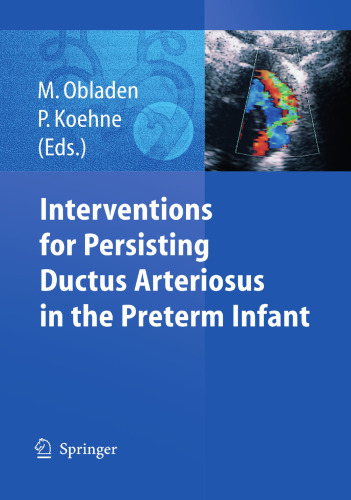

Navigating Neonatal Cardiology: Interventions for Persisting Ductus Arteriosus in the Preterm Infant
The management of a patent ductus arteriosus (PDA) in the extremely preterm infant remains one of the most fiercely debated topics in neonatology. While a PDA is essential for fetal circulation, its persistence after birth can lead to devastating complications, including pulmonary hemorrhage, necrotizing enterocolitis, and intraventricular hemorrhage. Yet, the interventions used to close it carry their own profound risks. Interventions for Persisting Ductus Arteriosus in the Preterm Infant is the definitive, uncompromising analysis of this complex clinical dilemma. This volume provides the exact, evidence-based frameworks required by neonatologists and pediatric cardiologists to navigate the agonizing decision of when, how, or even if to treat a PDA.
Mastering the Pathophysiology of the PDA
The core philosophy of this text is that intervention must be justified by hemodynamics, not just anatomy. The authors aggressively detail the complex physiological changes that occur when a left-to-right shunt persists in a premature cardiovascular system. They dictate exactly how a hemodynamically significant PDA (hsPDA) alters organ perfusion, providing the rigorous scientific rationale for intervention.
Navigating Medical vs. Surgical Management
The book provides a masterclass in treatment modalities. It dictates the exact pharmacological protocols for utilizing cyclooxygenase (COX) inhibitors (indomethacin, ibuprofen) and paracetamol, meticulously detailing their efficacy rates and potential side effects (e.g., renal impairment, gastrointestinal bleeding). Furthermore, it provides an exhaustive analysis of the indications and risks associated with surgical ligation or percutaneous catheter closure when medical management fails.
Managing Hemodynamic Instability in the Micro-Preemie
This is a fiercely practical guide to bedside management. The authors provide rigid protocols for managing the infant before, during, and after PDA intervention. The text dictates exactly how to optimize ventilator settings and fluid management to mitigate the effects of pulmonary overcirculation, ensuring the infant is hemodynamically stable regardless of the treatment chosen.
Integrating Echocardiography into Treatment Decisions
The final value of this reference is its reliance on targeted imaging. The text dictates the exact echocardiographic parameters required to determine the significance of a PDA. It ensures that clinicians are not treating a “murmur,” but are making intervention decisions based on objective measurements of ductal size, flow velocity, and left ventricular volume overload.
Frequently Asked Questions (FAQs)
Does this book address the strategy of “watchful waiting”?
Yes, it features critical, evidence-based discussions on the growing trend of conservative management, detailing the specific clinical scenarios where allowing spontaneous closure is the safest option.
Are there specific guidelines for managing post-ligation cardiac syndrome?
Absolutely. It provides explicit protocols for anticipating and managing the acute cardiovascular instability that frequently follows surgical ligation of a PDA.
Who is the primary audience?
It is the absolute, mandatory resource for Neonatologists, Pediatric Cardiologists, Neonatal Intensive Care Nurses, and Neonatal Fellows.
Conclusion
Interventions for Persisting Ductus Arteriosus in the Preterm Infant proves that managing a PDA requires nuanced judgment, not blanket protocols. It is the indispensable bedrock of evidence-based neonatal cardiology. By mastering the physiological principles, the pharmacological nuances, and the echocardiographic criteria detailed in this vital volume, specialists can navigate this complex controversy and optimize outcomes for the most vulnerable infants.


