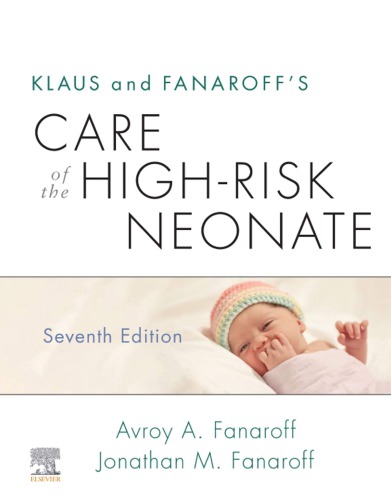


Navigating the NICU: Care of the High-Risk Neonate
The Neonatal Intensive Care Unit (NICU) is the most technologically intense and physiologically precarious environment in medicine. Here, survival depends on micro-adjustments to ventilators, precise fluid management, and rapid recognition of overwhelming sepsis in infants weighing mere hundreds of grams. Care of the High-Risk Neonate is the definitive, fiercely practical clinical reference designed to guide clinicians through these life-or-death decisions. This volume provides the exact blueprints required to stabilize, treat, and support the most vulnerable pediatric population.
Mastering the Complexities of Intensive Neonatal Medicine
The core philosophy of this text is physiological anticipation. The authors aggressively detail the transitions from fetal to extrauterine life, emphasizing how prematurity short-circuits this process. They dictate exactly how to anticipate the predictable crises of the extremely low birth weight (ELBW) infant—respiratory failure, intraventricular hemorrhage, and necrotizing enterocolitis (NEC)—and provide the strict protocols required to intervene before these events cause irreversible damage.
Navigating Prematurity, Respiratory Distress, and Hemodynamic Instability
The book provides a masterclass in neonatal resuscitation and life support. It dictates the exact clinical pathways for managing Respiratory Distress Syndrome (RDS), detailing the precise algorithms for surfactant administration and the escalation of non-invasive and invasive mechanical ventilation. It provides exhaustive instructions on managing patent ductus arteriosus (PDA) and treating the unique pathophysiology of persistent pulmonary hypertension of the newborn (PPHN).
Managing Neurologic Injury and Severe Infection
This is a fiercely practical guide to neuro-protection and infection control. The authors provide rigid frameworks for utilizing therapeutic hypothermia (cooling) in term infants with hypoxic-ischemic encephalopathy (HIE). The text dictates exactly how to recognize the subtle, often non-specific signs of early- and late-onset neonatal sepsis, emphasizing the absolute necessity of rapid, empiric antibiotic administration to prevent catastrophic shock.
Integrating Family-Centered Care with Advanced Life Support
The final value of this reference is its integration of holistic care within the intensive care setting. The text provides the exact protocols for promoting neurodevelopmental care, minimizing iatrogenic pain, and crucially, integrating the parents into the care team during the prolonged, terrifying NICU stay, addressing the complex ethical decisions surrounding the limits of viability.
Frequently Asked Questions (FAQs)
Does this book cover neonatal nutrition?
Yes, it features critical sections on establishing enteral feeding in premature infants, utilizing donor human milk, and managing complex total parenteral nutrition (TPN) to prevent growth failure and osteopenia of prematurity.
Is the management of congenital anomalies addressed?
Absolutely. It provides explicit guidelines for the pre-operative stabilization and post-operative management of surgical emergencies like congenital diaphragmatic hernia (CDH) and gastroschisis.
Who is the primary audience?
It is the absolute, mandatory clinical guide for Neonatologists, NICU Nurses, Neonatal Nurse Practitioners (NNPs), and Pediatric Residents.
Conclusion
Care of the High-Risk Neonate proves that successful neonatology requires an uncompromising command of developmental physiology, absolute precision in technological intervention, and deep compassion for the family unit. It is the indispensable bedrock of modern neonatal intensive care. By mastering the ventilation strategies, the hemodynamic protocols, and the neuroprotective measures detailed in this essential volume, clinicians can guide the highest-risk infants toward a healthy future.