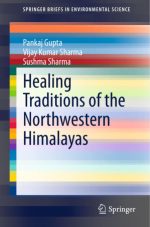
Ancient Wisdom Meets Modern Science: Healing Traditions of the Northwestern Himalayas
Long before the invention of the modern pharmaceutical laboratory, human beings relied on the deep, empirical science of ethnobotany. The highest, most extreme environments on Earth often produce the most resilient, chemically complex plant life. Healing Traditions of the Northwestern Himalayas is a breathtaking exploration of this ancient medical frontier. For pharmacognosists, medical anthropologists, and natural product researchers, this volume provides a profound, exhaustively documented catalog of the rare medicinal plants and ancient healing systems that have survived for millennia in the shadow of the world’s tallest mountains.
Unlocking the Pharmacopeia of the High Altitudes
The opening chapters of this book transport the reader to the extreme altitudes of the Himalayas. The authors establish that plants growing in these harsh conditions—facing intense UV radiation and freezing temperatures—must produce highly complex secondary metabolites (alkaloids and flavonoids) simply to survive. The text rigorously details how these exact defensive chemicals possess massive therapeutic potential for human medicine, serving as the raw blueprints for future antibiotic and anti-cancer drugs.
The Ayurvedic and Tibetan Medical Systems
The core of the textbook provides a masterclass in ancient medical philosophy. The authors do not treat these traditions as mere folklore; they approach them with deep scientific respect. Readers will explore the highly structured frameworks of Ayurveda and traditional Tibetan medicine (Sowa-Rigpa). The text explains how indigenous healers diagnose complex systemic imbalances and utilize precise, multi-herb formulations designed to treat the root cause of the disease, rather than merely suppressing the symptoms.
Discovering Novel Bioactive Compounds
This is a fiercely practical guide for modern drug discovery. The book bridges the gap between the indigenous healer and the modern chemist. The authors detail the rigorous scientific process of “bioprospecting.” They explain exactly how ethnobotanists interview local healers to identify a medicinal plant, and then hand that plant over to analytical chemists who use mass spectrometry to isolate and synthesize the specific active molecule responsible for the cure.
Conservation and Sustainable Harvesting Practices
The book tackles a massive ecological crisis. The global demand for “natural” medicine is literally destroying the Himalayas. The authors detail the devastating impact of over-harvesting rare, slow-growing alpine species (like the legendary Cordyceps fungus or Himalayan Yew). They provide strict, evidence-based blueprints for sustainable cultivation, ensuring these vital medicinal species are not driven to total extinction by the pharmaceutical industry.
Intellectual Property and Indigenous Rights
The final chapters address the fraught legal and ethical landscape of natural medicine. The authors fiercely defend the intellectual property rights of the indigenous healers. They explain the complex international laws (like the Nagoya Protocol) designed to prevent “biopiracy”—the unethical practice of western pharmaceutical companies patenting ancient indigenous cures without providing any financial compensation to the communities that discovered them.
Frequently Asked Questions (FAQs)
Does this book provide “recipes” for making herbal medicines?
While it details the traditional preparation methods (decoctions, powders), it is primarily a scientific and anthropological text. Readers should never attempt to harvest and consume wild alpine plants without expert botanical guidance due to extreme toxicity risks.
Is a background in botany required?
It is highly beneficial. The book utilizes strict Linnaean taxonomy to identify plants and discusses complex plant biochemistry in deep detail.
Who is the primary audience?
It is essential reading for Ph.D. pharmacognosists, ethnobotanists, and conservation biologists focused on the Himalayan region.
Conclusion
Healing Traditions of the Northwestern Himalayas proves that the most advanced chemistry on Earth was not invented in a laboratory; it was invented by nature. It is an indispensable guide to preserving this ancient knowledge. By respecting the indigenous healers and bridging their wisdom with modern analytical science, researchers can unlock a massive, untapped reservoir of life-saving medicines, while ensuring the sacred ecology of the Himalayas survives for future generations.