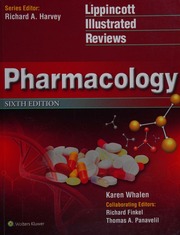
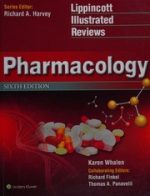
Visualizing the Cure: Lippincott Illustrated Reviews: Pharmacology
The human brain struggles to memorize endless pages of dense, unformatted text, yet a medical student is expected to perfectly recall the mechanism of action, side effects, and contraindications for hundreds of different drugs. Lippincott Illustrated Reviews: Pharmacology, 6th Edition solves this massive academic problem by transforming complex pharmacological data into brilliant, highly memorable visual art. For medical students, nursing professionals, and pharmacy students facing high-stakes board exams, this globally renowned textbook provides the absolute gold standard in rapid, visually-driven medical learning.
The Power of Visual Learning in Medical Science
The true genius of the Lippincott series is its complete reliance on full-color, annotated illustrations. Instead of simply stating that a drug blocks a specific enzyme, the book provides a beautifully rendered, step-by-step diagram showing the exact molecular structure of the receptor, the chemical binding of the drug, and the resulting cascade of cellular events. This allows students to visually anchor complex biochemical concepts, ensuring they can instantly recall the mechanism during a high-pressure exam.
High-Yield Summaries and Rapid-Review Outlines
This is not a sprawling, encyclopedic reference book; it is a precision-engineered review tool. The authors have brutally edited the text to include only the highest-yield information required for the USMLE Step 1, COMLEX, and NCLEX exams. The text is formatted in a highly structured, outline style, allowing students to rapidly scan massive amounts of information, instantly identifying the critical “buzzwords” and classic clinical presentations associated with specific drug toxicities.
Mastering Autonomic and Cardiovascular Drugs
The core of the textbook provides a masterclass in the most notoriously difficult subjects: the Autonomic Nervous System (ANS) and Cardiology. The visual diagrams perfectly map out the complex interplay of Alpha and Beta receptors, allowing students to definitively understand why giving a non-selective beta-blocker to an asthmatic patient will trigger a lethal bronchospasm. The cardiovascular sections provide brilliant, simplified schematics of the heart’s electrical conduction system, demystifying the complex Vaughan-Williams antiarrhythmic classifications.
Comprehensive Coverage of Chemotherapy and Antimicrobials
The final sections of the book tackle the massive memorization hurdles of oncology and infectious disease. The text utilizes brilliant comparison tables to organize the massive list of antibiotics, grouping them by their specific cellular targets (e.g., cell wall synthesis inhibitors vs. protein synthesis inhibitors). It clearly highlights the critical side effects—such as the “Red Man Syndrome” associated with rapid Vancomycin infusion—ensuring absolute clinical safety.
Board-Style Review Questions and Clinical Vignettes
Knowledge is useless if you cannot apply it to a patient. Every chapter concludes with rigorous, board-style review questions. These are not simple recall questions; they are complex clinical vignettes that force the student to diagnose the patient, select the best pharmacological intervention, and accurately predict the most likely adverse reaction.
Frequently Asked Questions (FAQs)
Is this book sufficient for a PharmD program?
While it is the ultimate review book, PharmD students will still need massive, comprehensive texts (like DiPiro or Goodman & Gilman) for deep clinical therapeutics. However, they rely on Lippincott to pass their fundamental pharmacology courses.
Does it cover the latest biologic drugs?
Yes, the 6th edition features critical updates on monoclonal antibodies and targeted immunotherapies, specifically in the treatment of autoimmune diseases and oncology.
Who is the primary audience?
Medical (MD/DO), Pharmacy (PharmD), and Advanced Practice Nursing (NP/CRNA) students in the thick of their preclinical training and board preparation.
Conclusion
Lippincott Illustrated Reviews: Pharmacology is the ultimate weapon against academic overwhelm. It proves that a picture is not just worth a thousand words; in medical school, a brilliant picture is worth a perfect board score. By mastering the visually anchored concepts and rigorous clinical vignettes detailed in this volume, students can permanently lock complex pharmacological data into their memory, ensuring absolute confidence on exam day and flawless safety in clinical practice.