The Brain’s Battlefield: Neuroimmune Pharmacology
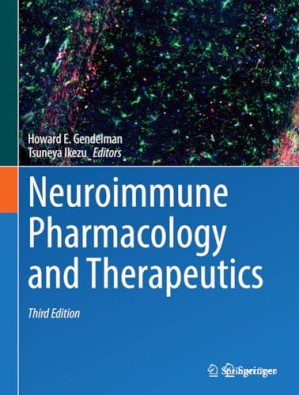
For decades, medical science believed that the human brain was an “immune-privileged” fortress, completely isolated behind the blood-brain barrier and largely ignored by the body’s immune system. We now know this is entirely false. The brain has its own aggressive immune system, and when it malfunctions, it destroys the mind. Neuroimmune Pharmacology is a groundbreaking, highly advanced textbook exploring the explosive intersection of neuroscience and immunology. For neuropharmacologists, research psychiatrists, and neurologists, this volume provides the definitive blueprints for understanding—and ultimately stopping—the neuroinflammation that drives our most devastating brain diseases.
The Intersection of Neuroscience and Immunology
The opening chapters completely rewrite traditional neurobiology. The authors provide a rigorous deconstruction of the brain’s immune architecture. They detail the complex, constant communication between the central nervous system (neurons) and the peripheral immune system (T-cells and macrophages). Readers will explore how massive systemic infections (like severe sepsis or COVID-19) can send chemical signals across the blood-brain barrier, triggering profound, long-lasting cognitive dysfunction and delirium.
Microglia: The Immune Sentinels of the CNS
The core of the textbook focuses on the true masters of the brain: the Microglia. These microscopic immune cells act as the brain’s garbage collectors and defense force. The text provides a masterclass on microglial activation. It details how, under normal conditions, they protect the brain, but when chronically activated by stress or misfolded proteins, they transform into aggressive killers, pumping out massive amounts of toxic inflammatory cytokines that actively slaughter healthy neurons.
Neuroinflammation in Neurodegenerative Diseases
The most vital chapters explore the role of neuroinflammation in incurable neurodegenerative diseases. The authors rigorously analyze the massive role of the immune system in Alzheimer’s Disease, detailing how microglia attempt to clear amyloid plaques but ultimately trigger a “cytokine storm” inside the brain. Furthermore, they explore the devastating autoimmune destruction of myelin sheaths in Multiple Sclerosis, and the inflammatory death of dopamine neurons in Parkinson’s Disease.
The Role of Cytokines in Psychiatric Disorders
The book explores a massive paradigm shift in psychiatry: the inflammatory hypothesis of depression. It provides compelling, cutting-edge data proving that Major Depressive Disorder is frequently not a primary neurotransmitter failure, but a severe neuro-immune reaction to chronic stress. The authors detail how inflammatory cytokines (like IL-6 and TNF-alpha) actively destroy serotonin pathways, explaining why patients with severe autoimmune diseases almost universally suffer from profound clinical depression.
Developing Targeted Anti-Inflammatory Neuromodulators
This is not merely a pathology textbook; it is a blueprint for drug discovery. The final chapters explore the race to invent neuroimmune modulators. Readers will explore the advanced pharmacology of designing drugs that can safely cross the blood-brain barrier specifically to “calm down” hyperactive microglia, or the highly experimental use of targeted biologic therapies (monoclonal antibodies) to halt the progression of neurodegenerative disease.
Frequently Asked Questions (FAQs)
Does this book cover the neurobiology of addiction?
Yes, it features critical chapters detailing how chronic exposure to drugs of abuse (like methamphetamine and alcohol) triggers massive microglial activation and neuroinflammation, fundamentally altering the brain’s reward circuitry.
Is the immunology highly complex?
Absolutely. This is a graduate-level text requiring a profound understanding of both neuroanatomy and cellular immunology, specifically complex cytokine signaling pathways.
Who is the primary audience?
It is essential reading for Ph.D. neuroscientists, industrial drug discovery researchers, and academic neurologists attempting to cure neurodegenerative disease.
Conclusion
Neuroimmune Pharmacology proves that to cure the brain, we must first tame its immune system. It is an indispensable guide to the most exciting and complex frontier in modern medicine. By mastering the intricate neuro-immune pathways and advanced pharmacological strategies detailed in this volume, scientists can finally develop the targeted, disease-modifying therapies required to halt Alzheimer’s, conquer severe depression, and save the human mind.