
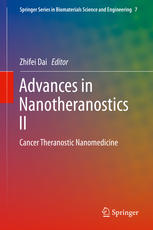
The Smart Bomb: Advances in Nanotheranostics II: Cancer Theranostic Nanomedicine
The archaic practice of diagnosing cancer with one technology and then treating it days later with another is over. The future of oncology is the “theranostic” nanoparticle—a microscopic, highly engineered machine designed to simultaneously locate the tumor, broadcast its location on an MRI, and instantly inject a lethal payload of poison directly into the cancer cell. Advances in Nanotheranostics II: Cancer Theranostic Nanomedicine is a fiercely advanced, highly technical biomedical engineering manual detailing the creation of these unified weapons. This volume provides the precise molecular blueprints required to execute search-and-destroy missions at the atomic level.
Mastering the Multifunctional Nanocarrier
The core philosophy of this text is the integration of imaging and therapy. The authors aggressively detail the mechanics of the theranostic construct. It dictates exactly how bioengineers synthesize a single gold nanoparticle that is simultaneously coated in fluorescent imaging dyes, loaded with highly toxic Doxorubicin, and wrapped in targeting antibodies, creating a single, perfect molecule of death.
Navigating Triggered Release
The book provides a masterclass in environmental detonation. It dictates the exact chemical pathways for targeted drug deployment. It rigorously explores how to engineer the nanoparticle’s shell to dissolve *only* in the highly acidic, low-oxygen environment of a tumor core, ensuring that the chemotherapy is never accidentally released while floating through the healthy heart or kidneys.
Frequently Asked Questions (FAQs)
Does this book provide standard IV dosing algorithms for clinical oncology?
No, it is a highly advanced *biomedical engineering, materials science, and nanomedicine textbook* focused entirely on the design and synthesis of next-generation theranostic agents.
Who is the primary audience?
It is the absolute, mandatory benchtop reference for Bioengineers, Nanotechnologists, Radiochemists, and Translational Researchers.


