
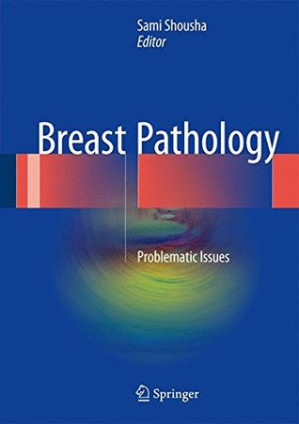
The Diagnostic Minefield: Breast Pathology: Problematic Issues
The diagnosis of a breast lesion is rarely straightforward. Pathologists are constantly confronted with tiny, crushed needle core biopsies where the distinction between a benign, complex sclerosing lesion (like a radial scar) and a highly aggressive tubular carcinoma rests on subtle, easily misinterpreted architectural clues. Breast Pathology: Problematic Issues is a fiercely specialized, problem-oriented manual designed specifically to navigate these treacherous gray zones. This volume provides the exact blueprints required to avoid the catastrophic pitfalls of over-diagnosing benign mimics or missing subtle malignancies.
Mastering the Borderline Lesions
The core philosophy of this text is aggressive differential diagnosis. The authors tackle the most difficult areas of breast pathology head-on. It dictates exactly how to apply strict quantitative and qualitative criteria to differentiate atypical ductal hyperplasia (ADH) from low-grade ductal carcinoma in situ (DCIS)—a distinction that drastically alters the patient’s surgical management and psychological burden.
Navigating Fibroepithelial Tumors and Spindle Cell Lesions
The book provides a masterclass in utilizing immunohistochemistry (IHC) effectively. It dictates the exact clinical pathways for employing myoepithelial markers (like p63 and calponin) to prove the presence or absence of an invasive component in complex papillary lesions. It provides exhaustive guidelines on how to safely separate benign cellular fibroadenomas from potentially malignant phyllodes tumors, and how to navigate the incredibly challenging spectrum of spindle cell lesions of the breast.
Frequently Asked Questions (FAQs)
Is this a comprehensive textbook?
No, it is deliberately focused *only* on the most difficult, controversial, and litigious areas of breast pathology, assuming the reader already has a foundational understanding of the subject.
Who is the primary audience?
It is the absolute, mandatory bench-side manual for Breast Pathologists, General Surgical Pathologists, and Pathology Residents.


