
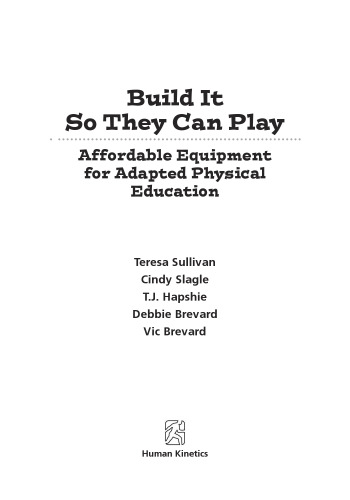


Designing Inclusive Spaces: Build It So They Can Play
The right to play is fundamental to childhood development, yet children with disabilities are routinely excluded from community spaces by thoughtless design. Build It So They Can Play is the definitive, fiercely practical manual dedicated to the creation of truly inclusive, universally accessible playgrounds. This volume provides the exact architectural, developmental, and regulatory blueprints required to design recreational spaces that welcome children of all physical, sensory, and cognitive abilities.
Mastering the Principles of Accessible Playground Design
The core philosophy of this text is that true inclusion goes far beyond mere compliance with minimum legal standards. The authors aggressively deconstruct the concept of ‘Universal Design.’ They detail exactly how to move beyond basic ramp access to create environments where children with mobility devices can actively participate in the core play experience alongside their able-bodied peers, ensuring equitable play value.
Navigating ADA Guidelines and Universal Design Concepts
The book provides a masterclass in regulatory compliance and best practices. It dictates the exact specifications required by the Americans with Disabilities Act (ADA) for accessible routes, transfer systems, and unitary surfacing. It provides exhaustive details on exceeding these minimums, illustrating how thoughtful grading, customized equipment selection, and spatial organization create a vastly superior, truly barrier-free environment.
Managing the Creation of Sensory-Rich, Barrier-Free Environments
This is a fiercely practical guide to designing for the neurodivergent child. The authors provide rigid frameworks for integrating sensory play elements (auditory, tactile, visual, and vestibular) that benefit children with autism and sensory processing disorders. The text dictates exactly how to design ‘quiet zones,’ mitigate sensory overload, and utilize color and texture to provide crucial wayfinding cues for children with cognitive or visual impairments.
Integrating Play Value for Children of All Abilities
The final value of this reference is its focus on the social dynamics of play. The text provides the exact strategies for clustering equipment to encourage cooperative play between children of differing abilities. It dictates how to design spaces that allow parents and caregivers with disabilities to actively engage with their children, ensuring the playground serves the entire community.
Frequently Asked Questions (FAQs)
Does this book address funding and community advocacy?
Yes, it includes vital sections on how to build community consensus, navigate the complex grant-writing process, and advocate for municipal funding to make inclusive playgrounds a reality.
Are there specific blueprints or layout examples provided?
Absolutely. The text is heavily illustrated with detailed site plans, equipment schematics, and case studies of successful inclusive playgrounds from around the world.
Who is the primary audience?
It is the absolute, mandatory design manual for Landscape Architects, Urban Planners, Parks and Recreation Directors, and Community Advocates for the disabled.
Conclusion
Build It So They Can Play proves that creating inclusive spaces requires an uncompromising commitment to universal design, deep empathy for diverse needs, and rigorous technical execution. It is the indispensable bedrock of modern community planning. By mastering the ADA requirements, the sensory integration strategies, and the inclusive design principles detailed in this vital volume, professionals can build a world where every child truly has the opportunity to play.


