


The Business of Cures: Business Development in Biotech
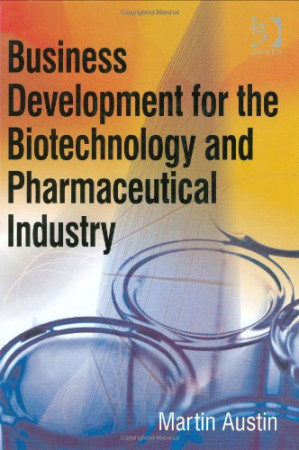
Inventing a miraculous new drug in a laboratory is only the first step; funding the billion-dollar, decade-long clinical trial required to bring that drug to market is an entirely different battle. The biotechnology industry is a unique financial ecosystem where brilliant science frequently dies not because the chemistry failed, but because the business strategy was flawed. Business Development for the Biotechnology and Pharmaceutical Industry is the definitive corporate playbook for this high-stakes arena. For biotech CEOs, venture capitalists, and academic founders, this volume provides the critical financial, legal, and strategic frameworks required to navigate the treacherous path from a university patent to a blockbuster commercial drug.
Navigating High-Risk, High-Reward Science
The opening chapters of this book establish the brutal reality of biopharma economics: over 90% of drugs that enter clinical trials fail. The authors provide a masterclass in risk management, detailing how biotech companies must strategically manage their “pipeline” of drug candidates. Readers will learn how to balance highly innovative, but incredibly risky, early-stage research with safer, later-stage assets to ensure the company survives the inevitable scientific setbacks.
Intellectual Property and Patent Strategy
In the biotechnology industry, your patent is your only product. This textbook deeply explores the critical intersection of science and law. It details the aggressive strategies required to secure ironclad Intellectual Property (IP) rights for a novel molecule. Furthermore, it explains how business development (BD) executives utilize complex “Freedom to Operate” (FTO) analyses to ensure their new drug does not accidentally infringe on a massive pharmaceutical competitor’s existing patent.
In-Licensing, Out-Licensing, and Strategic Partnerships
Small biotech startups rarely have the hundreds of millions of dollars required to run a massive Phase III clinical trial or build a global sales force. Therefore, survival relies on strategic partnerships. The core of this book provides an exhaustive, step-by-step guide to the licensing process. It details how a small startup successfully “out-licenses” their promising drug to a massive pharmaceutical giant (like Pfizer or Novartis), explaining the complex structure of upfront payments, clinical milestones, and commercial royalties.
Valuation Models for Pre-Clinical Assets
How do you place a financial value on a chemical compound that has only ever been tested in a mouse, yet might cure cancer in humans ten years from now? The text provides highly advanced financial modeling techniques. Readers will master risk-adjusted Net Present Value (rNPV) calculations, learning how BD executives mathematically quantify the probability of clinical success, the estimated cost of FDA approval, and the ultimate peak sales potential of a drug to determine its true value during corporate negotiations.
Mergers, Acquisitions, and Venture Capital
The final chapters explore the ultimate endgame for most successful biotech startups: acquisition. The authors detail the complex M&A (Mergers and Acquisitions) landscape, explaining exactly what massive pharmaceutical companies look for when deciding to acquire a smaller company. Additionally, it explores the critical role of Venture Capital (VC) in funding early-stage research, providing founders with the insights required to successfully pitch their science to elite healthcare investors.
Frequently Asked Questions (FAQs)
Is a background in finance required to understand this book?
While helpful, the book is designed to bridge the gap. It translates complex financial modeling (like rNPV) into terms that academic scientists and medical doctors can easily grasp.
Does it cover the regulatory role of the FDA?
Yes, because regulatory risk is the biggest financial risk in biotech. It explains how FDA feedback (or the lack thereof) directly impacts the financial valuation of a drug asset.
Is this relevant for academic researchers?
Absolutely. It is essential reading for university “Technology Transfer” offices tasked with spinning out promising academic research into viable, funded commercial startups.
Conclusion
Business Development for the Biotechnology and Pharmaceutical Industry proves that saving lives requires brilliant business acumen just as much as brilliant science. It is an indispensable guide to the corporate machinery of modern medicine. By mastering the licensing strategies, valuation models, and IP frameworks detailed in this volume, biotech leaders can secure the vital funding necessary to transform their fragile laboratory discoveries into robust, globally available pharmaceutical cures.