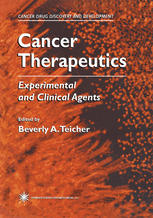

The Architecture of Poison: Cancer Therapeutics: Experimental and Clinical Agents
Every cancer drug in existence begins as a mathematical theory, a molecular sketch drawn by a chemist trying to build a microscopic lock-pick. From that sketch, it must survive a brutal, multi-billion dollar gauntlet of toxicity testing before it is ever allowed near a human vein. Cancer Therapeutics: Experimental And Clinical Agents is the fiercely technical, highly pharmacological master manual detailing exactly how this process works. This volume provides the precise chemical and biological blueprints required to design, test, and deploy the next generation of systemic poisons.
Mastering the Small Molecule Inhibitor
The core philosophy of this text is targeted kinase blockade. The authors aggressively detail the mechanics of rational drug design. It dictates exactly how pharmacologists map the 3D structure of a mutated cancer protein (like EGFR) and custom-synthesize a small molecule that perfectly wedges itself into the protein’s ATP-binding pocket, instantly turning off the tumor’s engine without harming the surrounding healthy cells.
Navigating the Monoclonal Antibody
The book provides a masterclass in biological engineering. It dictates the exact pharmacological pathways for immunotherapy synthesis. It rigorously explores how scientists genetically engineer mammalian cells in massive bioreactors to continuously churn out massive “Y-shaped” antibody proteins, which are designed to be injected into the patient to hunt down specific cancer cells and flag them for violent destruction by the immune system.
Frequently Asked Questions (FAQs)
Does this book focus on the emotional support of patients receiving chemotherapy?
No, its absolute, exclusive focus is on the *medicinal chemistry, pharmacology, and clinical trial development* of anti-cancer agents.
Who is the primary audience?
It is the absolute, mandatory benchtop reference for Medicinal Chemists, Pharmacologists, Medical Oncologists, and Drug Development Scientists.