
It is generally easy to define the efficacy of a new the- peutic agent. However, what is even more difficult and more challenging yet more important is to define its safety when administered to millions of patients with multi-faceted d- eases, co-morbidities, sensitivities and concomitant medi- tions. The commonest cause of new drug discontinuations, cause for disapproval from marketing and removal from the market after approval is a drug’s effect on cardiac repolari- tion which is essentially identified by increasing the duration of the QTc interval duration on the standard 12-lead elect- cardiogram (ECG). Cardiac Safety of Noncardiac Drugs: Practical Guide- Joel Morganroth, MD lines for Clinical Research and Drug Development is designed to present the current preclinical, clinical, and re- latory principles to assess the cardiac safety of new drugs based primarily on their effects on the ECG. Practical gu- ance to define cardiac safety at all stages of clinical research and drug development are featured and discussed by inter- tionally recognized experts with academic, industrial, and regulatory experience. Each chapter contains the best ava- able evidence, the author’s personal opinions, areas of c- troversy, and future trends. Although some of the areas are highly specialized, this book has been designed for a broad audience ranging from medical and graduate students to cli- cal nurses, clinical trial coordinators, safety officers, data managers, statisticians, regulatory authorities, clinicians, and Ihor Gussak, MD, PhD scientists.
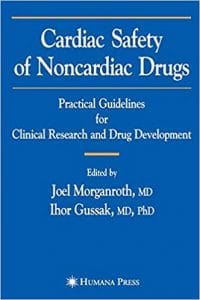

Cardiac Safety of Noncardiac Drugs: Practical Guidelines for Clinical Research and Drug Development
 Pediatric Cardiology: Symptoms – Diagnosis – Treatment
 Essential Cardiology: Principles and Practice
Cardiac Safety of Noncardiac Drugs: Practical Guidelines for Clinical Research and Drug Development
Original price was: $69.00.$4.99Current price is: $4.99.
-93%


