
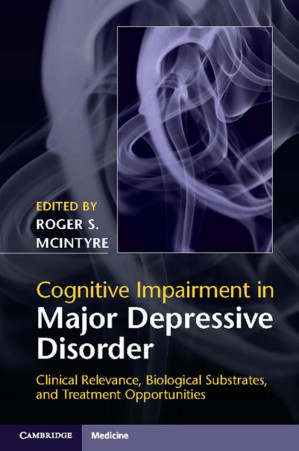


Beyond Sadness: Cognitive Impairment in Major Depressive Disorder
Major Depressive Disorder (MDD) is universally recognized by its emotional symptoms—profound sadness and anhedonia. However, the often-overlooked cognitive deficits—poor concentration, impaired memory, and sluggish executive function—are frequently what prevent a patient from returning to work and resuming a functional life. Cognitive Impairment in Major Depressive Disorder: Clinical Relevance, Biological Substrates, and Treatment Opportunities is the definitive, fiercely clinical text that reframes MDD as a pervasive neurocognitive disease. This volume provides the exact blueprints required by psychiatrists to assess, measure, and aggressively treat the cognitive domains ravaged by depression.
Mastering the Neurobiology of Cognitive Deficits
The core philosophy of this text is that cognitive impairment is a core feature of MDD, not merely a secondary side effect. The authors aggressively detail the underlying biological substrates, dictating exactly how chronic stress and hypercortisolemia lead to hippocampal atrophy and disrupted neurogenesis. It provides the crucial neuroimaging and biomarker evidence linking systemic inflammation to the specific prefrontal cortex dysfunction observed in depressed patients.
Navigating Assessment and Targeted Interventions
The book provides a masterclass in functional recovery. It dictates the exact clinical pathways for utilizing validated neuropsychological testing to quantify the specific deficits in working memory and processing speed. It provides exhaustive reviews of treatment strategies, debating the efficacy of specific antidepressants (like vortioxetine) that show promise in improving cognition, alongside non-pharmacological interventions like cognitive remediation therapy and transcranial magnetic stimulation (TMS).
Frequently Asked Questions (FAQs)
Does this book address cognitive impairment in late-life depression?
Yes, it features critical sections on distinguishing the cognitive deficits of severe depression (pseudodementia) from the early stages of neurodegenerative diseases like Alzheimer’s.
Who is the primary audience?
It is the absolute, mandatory clinical guide for Psychiatrists, Clinical Psychologists, Neuropsychologists, and Psychopharmacology Researchers.


