
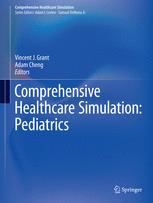

Advanced Training: Comprehensive Healthcare Simulation: Pediatrics
In pediatric medicine, high-stakes, low-frequency emergencies—such as neonatal resuscitation, severe trauma, or complicated airway management—leave little room for on-the-job learning. Clinical competence in these scenarios requires rigorous, highly realistic practice that does not jeopardize patient safety. Comprehensive Healthcare Simulation: Pediatrics is the definitive, fiercely structured manual designed to elevate the standard of pediatric medical education. This volume provides the exact blueprints required by simulation educators to design, execute, and debrief high-fidelity training scenarios that translate directly to improved clinical outcomes.
Mastering Pediatric Emergencies Through Simulation
The core philosophy of this text is that experiential learning is paramount. The authors aggressively detail how to replicate the physiological and psychological stress of a pediatric code. They dictate exactly how to utilize advanced manikins, standardized patients, and virtual reality to create immersive environments where learners can practice critical interventions—such as intraosseous line placement or difficult intubations—until they achieve unconscious competence.
Navigating High-Fidelity Scenario Design and Execution
The book provides a masterclass in educational architecture. It dictates the exact methodology for designing simulation cases that align with specific learning objectives (e.g., recognizing sepsis vs. cardiogenic shock). It provides exhaustive instructions on script writing, programming vital sign trends to respond realistically to learner interventions, and managing the technical logistics of a simulation center.
Managing Team Dynamics and Crisis Resource Management
This is a fiercely practical guide to improving human performance. The authors provide rigid frameworks for teaching Crisis Resource Management (CRM) principles. The text dictates specific protocols for training multidisciplinary teams—physicians, nurses, and respiratory therapists—on effective communication, role allocation, and situational awareness during rapidly deteriorating pediatric scenarios.
Integrating Simulation into Pediatric Residency Curricula
The final value of this reference is its focus on structural integration. The text provides the exact strategies for embedding simulation seamlessly into pediatric residency and nursing programs. It dictates how to utilize debriefing techniques effectively, ensuring that learners reflect critically on their performance, identify cognitive errors, and solidify life-saving clinical algorithms.
Frequently Asked Questions (FAQs)
Does this book address in situ simulation?
Yes, it features critical sections on conducting simulations directly in the clinical environment (e.g., the ER or PICU) to identify latent safety threats and improve unit-level system responses.
Are there specific guidelines for simulating neonatal scenarios?
Absolutely. It provides explicit protocols for designing scenarios based on the Neonatal Resuscitation Program (NRP), focusing on the unique physiological transitions of the newborn.
Who is the primary audience?
It is the absolute, mandatory manual for Simulation Educators, Pediatric Residency Directors, Clinical Nurse Educators, and Quality Improvement Specialists.
Conclusion
Comprehensive Healthcare Simulation: Pediatrics proves that practice does not make perfect; perfect practice makes perfect. It is the indispensable bedrock of modern pediatric medical training. By mastering the scenario design, the CRM principles, and the debriefing techniques detailed in this vital volume, educators can forge clinical teams capable of handling the most terrifying pediatric emergencies with precision and calm.


