
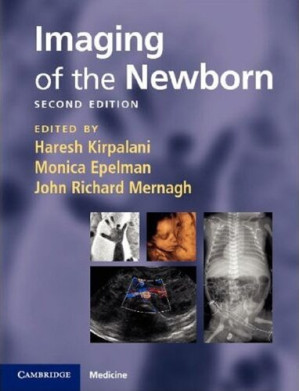


Diagnostic Clarity: Imaging of the Newborn (Cambridge Medicine)
The diagnostic evaluation of a critically ill neonate presents unique radiological challenges. The patients are minuscule, highly sensitive to ionizing radiation, and suffer from a distinct spectrum of congenital and acquired pathologies rarely seen in older children. Interpreting their imaging requires a specialized, highly trained eye. Imaging of the Newborn (Cambridge Medicine) is the definitive, fiercely detailed visual masterwork designed to provide this expertise. This volume provides the exact, rigorous radiological criteria required by specialists to accurately diagnose devastating neonatal conditions and guide life-saving interventions.
Mastering Neonatal Radiology and Ultrasound
The core philosophy of this text is absolute anatomical fluency within the context of extreme immaturity. The authors aggressively detail the normal radiological appearance of the developing fetus and premature infant. They dictate exactly how developmental stages—such as incomplete ossification or normal thymic shadows—present on imaging, ensuring that normal physiological variants are not misinterpreted as life-threatening pathology.
Navigating Congenital Anomalies and Acquired Pathologies
The book provides a masterclass in pattern recognition for the NICU. It dictates the exact diagnostic criteria for catastrophic neonatal emergencies. It provides exhaustive, highly illustrated chapters on the radiographic appearance of Respiratory Distress Syndrome (RDS), the subtle early signs of Necrotizing Enterocolitis (NEC), and the complex anatomical derangements associated with congenital heart disease and diaphragmatic hernias.
Managing Modality Selection in the NICU
This is a fiercely practical guide to minimizing iatrogenic harm. The authors provide rigid algorithms for modality selection, prioritizing the ALARA (As Low As Reasonably Achievable) principle. The text dictates the exact, expanded role of high-resolution cranial and abdominal ultrasound, teaching the clinician how to extract maximum diagnostic data at the bedside without exposing the fragile neonate to the radiation of a CT scan.
Integrating Imaging Findings with Clinical Care
The final value of this reference is its seamless integration into the clinical workflow of the NICU. The text dictates that the radiologist and neonatologist must speak the same language. It ensures that imaging reports answer specific, urgent clinical questions, such as confirming the precise placement of umbilical catheters or endotracheal tubes, directly influencing immediate patient management.
Frequently Asked Questions (FAQs)
Does this textbook cover neonatal MRI?
Yes, it features critical, advanced sections on the use of MRI in the neonate, specifically dictating its role in evaluating hypoxic-ischemic encephalopathy (HIE) and complex congenital brain malformations.
Are there specific guidelines for interpreting pediatric chest X-rays?
Absolutely. It provides explicit, step-by-step algorithms for evaluating the neonatal chest, dictating how to differentiate between transient tachypnea of the newborn (TTN), meconium aspiration, and neonatal pneumonia.
Who is the primary audience?
It is the absolute, mandatory visual reference for Pediatric Radiologists, Neonatologists, General Radiologists, and NICU Advanced Practice Nurses.
Conclusion
Imaging of the Newborn (Cambridge Medicine) proves that protecting the most fragile patients requires unparalleled visual expertise and a commitment to safe imaging practices. It is the indispensable bedrock of neonatal diagnostics. By mastering the normal variants, the injury patterns, and the modality algorithms detailed in this vital volume, specialists can confidently map the pathology and protect the neonate from both disease and unnecessary radiation.


