
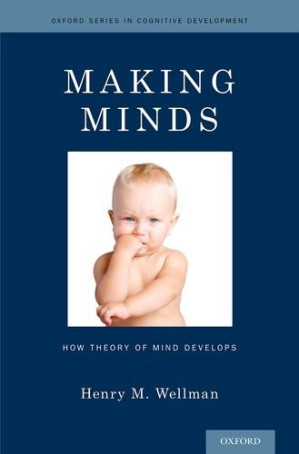



The Psychology of Understanding: Making Minds: How Theory of Mind Develops
The ability to understand that other people have beliefs, desires, and intentions different from one’s own is a cornerstone of human social interaction. This cognitive leap, known as “Theory of Mind” (ToM), does not occur instantaneously; it is a complex developmental process that unfolds dramatically during early childhood. Making Minds: How Theory of Mind Develops (Oxford Series in Cognitive Development) is the definitive, fiercely academic exploration of this crucial psychological milestone. This volume provides the exact theoretical frameworks and empirical research required by psychologists and educators to understand how children learn to “read minds.”
Mastering the Cognitive Milestones of Childhood
The core philosophy of this text is rigorous developmental tracking. The authors aggressively analyze the stages of ToM acquisition. They dictate exactly how infants progress from joint attention and understanding basic intentions to the sophisticated ability of a preschooler to recognize that someone else can hold a belief that is objectively false. The text deconstructs the cognitive architecture required for this leap, including executive function and language development.
Navigating False Beliefs and Social Cognition
The book provides a masterclass in classic psychological experimentation. It dictates the methodology and significance of the foundational “false-belief tasks” (e.g., the Sally-Anne test). It provides exhaustive analysis of how successfully navigating these tasks correlates with a child’s ability to engage in complex social behaviors, such as deception, persuasion, and sophisticated pretend play.
Managing Atypical Development in Autism Spectrum Disorder
This is a fiercely important guide for understanding neurodivergence. The authors provide rigid comparisons between typical ToM development and the profound challenges faced by children with Autism Spectrum Disorder (ASD). The text dictates exactly how a specific deficit in ToM—”mindblindness”—accounts for many of the social and communicative impairments characteristic of autism, providing a crucial framework for targeted interventions.
Integrating Developmental Psychology with Educational Practice
The final value of this reference is its application to real-world environments. The text dictates how a robust Theory of Mind is essential for school readiness, peer relationships, and conflict resolution. It ensures that educators and child psychologists understand how to foster environments that encourage perspective-taking and social-emotional learning.
Frequently Asked Questions (FAQs)
Does this text explore the neurological basis of Theory of Mind?
Yes, it features critical sections reviewing the latest neuroimaging (fMRI) data, dictating which specific brain regions (such as the medial prefrontal cortex and the temporoparietal junction) are implicated in ToM tasks.
Are there specific discussions on cross-cultural differences in ToM development?
Absolutely. It provides explicit analysis of how different cultural narratives and parenting styles impact the timeline and expression of ToM milestones globally.
Who is the primary audience?
It is the absolute, mandatory academic text for Developmental Psychologists, Cognitive Scientists, Child Psychiatrists, and Advanced Students in psychology and education.
Conclusion
Making Minds: How Theory of Mind Develops proves that the most profound human achievement is not walking or talking, but understanding the inner lives of others. It is the indispensable bedrock of cognitive developmental psychology. By mastering the experimental paradigms, the developmental timelines, and the clinical implications detailed in this vital volume, professionals gain unparalleled insight into the architecture of human social cognition.


