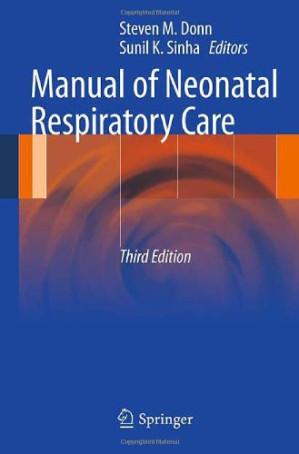


Breathing Life: Manual of Neonatal Respiratory Care
The transition from fluid-filled fetal lungs to air-breathing respiration is the most dangerous physiological event in a human life. For premature infants, whose lungs are profoundly underdeveloped and surfactant-deficient, this transition frequently fails. The resulting respiratory distress requires immediate, highly sophisticated mechanical intervention. Manual of Neonatal Respiratory Care is the definitive, fiercely clinical guide designed for the high-stakes environment of the NICU. This volume provides the exact, aggressive protocols required by neonatologists and respiratory therapists to support fragile lungs without causing irreversible damage.
Mastering the Fragile Mechanics of the Neonatal Lung
The core philosophy of this text is that ventilation must be meticulously balanced against the risk of injury. The authors aggressively detail the pathophysiology of Respiratory Distress Syndrome (RDS) and Bronchopulmonary Dysplasia (BPD). They dictate exactly how the extreme compliance of the premature chest wall and the stiffness of the immature alveoli necessitate radically different ventilatory strategies compared to older children or adults.
Navigating CPAP, Conventional Ventilation, and HFOV
The book provides a masterclass in modality selection. It dictates the exact indications for non-invasive support (CPAP) to prevent alveolar collapse. It provides exhaustive, step-by-step algorithms for initiating and weaning conventional mechanical ventilation (CMV). Crucially, it details the complex physics and rigid protocols required to safely deploy High-Frequency Oscillatory Ventilation (HFOV) for the most critically ill infants failing conventional support.
Managing Surfactant Therapy and Pulmonary Hypertension
This is a fiercely practical guide to targeted pharmacology. The authors provide rigid protocols for the timing and administration of exogenous surfactant (e.g., INSURE technique). The text dictates exactly how to diagnose and manage Persistent Pulmonary Hypertension of the Newborn (PPHN), providing explicit guidelines for the use of inhaled nitric oxide (iNO) and extracorporeal membrane oxygenation (ECMO) in refractory cases.
Integrating Blood Gas Analysis with Ventilator Adjustments
The final value of this reference is its focus on real-time physiological feedback. The text dictates exactly how to interpret a neonatal arterial blood gas (ABG) in the context of the ventilator settings. It ensures that clinicians understand precisely which dials to turn (e.g., adjusting PIP, PEEP, or Rate) to correct specific abnormalities in oxygenation (PaO2) or ventilation (PaCO2) without causing barotrauma or volutrauma.
Frequently Asked Questions (FAQs)
Does this manual cover the management of meconium aspiration syndrome (MAS)?
Yes, it features critical sections on the complex pathophysiology of MAS, dictating the specific ventilatory strategies (often requiring HFOV) needed to manage the severe air trapping and pulmonary hypertension associated with this condition.
Are there specific guidelines for extubation readiness?
Absolutely. It provides explicit, evidence-based criteria for determining when a premature infant is physiologically capable of sustaining spontaneous breathing, minimizing the risk of extubation failure.
Who is the primary audience?
It is the absolute, mandatory handbook for Neonatologists, Neonatal Nurse Practitioners, Respiratory Therapists, and NICU Fellows.
Conclusion
Manual of Neonatal Respiratory Care proves that saving a premature infant’s lungs requires an uncompromising mastery of physics, physiology, and technology. It is the indispensable bedrock of the NICU. By mastering the ventilatory modalities, the surfactant protocols, and the blood gas interpretation strategies detailed in this vital volume, clinicians can successfully navigate the most critical moments of a fragile life.