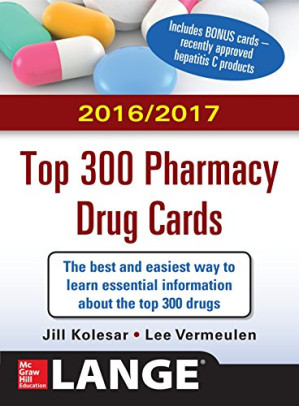


The Ultimate Memorization Tool: McGraw-Hill’s 2016/2017 Top 300 Pharmacy Drug Cards
A pharmacy student is required to memorize thousands of discrete, highly volatile facts. Relying on massive textbooks to study for a timed board exam is inefficient and often disastrous. McGraw-Hill’s 2016/2017 Top 300 Pharmacy Drug Cards (3rd Edition) is the definitive, fiercely optimized tactical study weapon. For PharmD students preparing for the NAPLEX and pharmacy technicians facing the PTCE, this massive deck isolates the absolute core of the modern pharmacy, forcing the brain to rapidly retrieve the most critical, high-yield pharmacological data under intense pressure.
Conquering the Most Prescribed Medications
The core genius of this collection is its ruthless elimination of “noise.” The authors have systematically stripped away the obscure, rare drugs that clutter medical textbooks. Instead, they focus entirely on the “Top 300” medications—the absolute foundation of modern retail and hospital pharmacy. By forcing the student to master this specific, highly curated list, the deck ensures the student will instantly recognize almost every prescription they encounter on their board exams.
High-Yield Data Engineered for Rapid Recall
Every single card is a masterpiece of cognitive engineering. The front of the card forces recognition by displaying the generic and major brand names. The back of the card provides a highly structured, instantly readable breakdown. It provides the exact pharmacologic class, the primary FDA-approved clinical indications (what the drug actually treats), and the standard dosing, allowing for rapid, high-speed flashcard drilling.
Critical Focus on Black Box Warnings
This is a fiercely practical guide to absolute patient safety. The cards heavily emphasize the FDA’s most severe warnings. If a drug carries a “Black Box Warning” for severe liver failure or sudden cardiac death, it is highlighted in uncompromising terms. The board examiners love to test on absolute contraindications, and this deck forces the student to memorize the exact scenarios where a common drug becomes a lethal poison.
Navigating Dangerous Drug Interactions
The cards provide a rigorous, easily digestible breakdown of pharmacology’s greatest pitfall: drug interactions. The authors utilize strict formatting to highlight how a drug is metabolized (specifically noting Cytochrome P450 enzyme pathways). This allows the student to quickly memorize the classic “red flag” combinations, ensuring they can instantly answer exam questions about which two drugs will violently collide in a patient’s liver.
Preparing for the NAPLEX and PTCE Exams
The final value of this collection is its sheer alignment with the boards. These cards are specifically designed by clinical educators to mirror the exact style and content of the massive NAPLEX and PTCE licensing exams. They train the student’s brain not just to understand the drug, but to rapidly retrieve the specific data points that the board examiners use to construct their multiple-choice questions.
Frequently Asked Questions (FAQs)
Are the 2016/2017 cards still accurate?
The foundational mechanism of action and side effects for these classic “Top 300” drugs remain absolute. However, students must supplement this older deck with current reviews to catch any newly approved brand names or recently updated FDA safety warnings.
Do the cards include phonetic pronunciations?
Yes, they provide critical phonetic spelling for massive, complex generic names, helping students confidently communicate during oral exams and clinical rounds.
Who is the primary audience?
It is the absolute, mandatory survival tool for P3/P4 pharmacy students preparing for boards, and dedicated pharmacy technicians seeking national certification.
Conclusion
Top 300 Pharmacy Drug Cards is the ultimate antidote to test anxiety. It proves that rote memorization can be highly strategic. By utilizing the structured formatting, the relentless focus on safety warnings, and the hyper-curated drug list provided in this collection, students can rapidly build the rock-solid pharmacological foundation required to completely dominate their licensing exams.