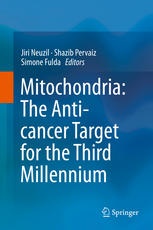

The Cellular Powerhouse Hijacked: Mitochondria: The Anti-cancer Target for the Third Millennium
Cancer cells consume massive amounts of glucose, fundamentally altering how they generate energy compared to normal tissue (the Warburg effect). For decades, scientists ignored the mitochondria of the cancer cell, believing they were broken. We now know they are actively reprogrammed to prevent the cell from committing suicide. Mitochondria: The Anti-cancer Target for the Third Millennium is a fiercely advanced, highly biochemical manual detailing exactly how to weaponize this metabolic engine. This volume provides the precise pharmacological blueprints required to trigger a catastrophic energy failure inside the tumor.
Mastering Mitochondrial Membrane Permeabilization
The core philosophy of this text is forcing the suicide sequence. The authors aggressively detail the mechanics of the mitochondrial outer membrane. It dictates exactly how cancer cells actively block the release of Cytochrome C from the mitochondria, rendering them immortal, and how experimental “mitocans” (mitochondria-targeted anti-cancer drugs) are engineered to violently puncture this membrane, forcing the cell to instantly execute itself.
Navigating the Hexokinase II Blockade
The book provides a masterclass in metabolic starvation. It dictates the exact biochemical pathways for shutting down glycolysis. It rigorously explores how the cancer cell physically bolts the hexokinase II enzyme directly to the outside of the mitochondria to create an unstoppable energy loop, and how targeted therapies are designed to physically rip this enzyme off, instantly starving the cell to death.
Frequently Asked Questions (FAQs)
Is this a diet book about eating keto or fasting to cure cancer?
Absolutely not. It is a highly rigorous *biochemistry, molecular pharmacology, and cellular biology textbook* focused entirely on the microscopic mechanics of the mitochondrial electron transport chain and apoptotic pathways.
Who is the primary audience?
It is the absolute, mandatory benchtop reference for Biochemists, Cancer Biologists, Molecular Pharmacologists, and Drug Development Scientists.