

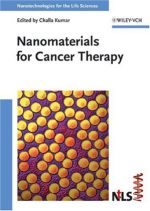

The Microscopic Assassin: Nanomaterials for Cancer Therapy
Standard chemotherapy is a blunt instrument; it floods the entire body with poison, hoping to kill the tumor before it kills the patient’s bone marrow. Nanomedicine is the promise of the sniper rifle. Nanomaterials for Cancer Therapy is a fiercely advanced, brilliantly complex bioengineering manual detailing exactly how to build a microscopic delivery vehicle. This volume provides the precise physical and chemical blueprints required to smuggle a lethal payload directly into the heart of a cancer cell.
Mastering the EPR Effect
The core philosophy of this text is exploiting the tumor’s flawed architecture. The authors aggressively detail the Enhanced Permeability and Retention (EPR) effect. It dictates exactly how a tumor builds leaky, chaotic blood vessels, allowing bioengineers to design a liposomal nanoparticle (like Doxil) exactly 100 nanometers wide—small enough to fall through the cracks of the tumor’s blood vessels, but too large to escape back out, forcing the poison to accumulate exclusively inside the cancer.
Navigating Active Targeting
The book provides a masterclass in molecular homing devices. It dictates the exact chemical pathways for functionalizing the nanoparticle surface. It rigorously explores how to chemically attach folic acid or monoclonal antibodies to the outside of a carbon nanotube, ensuring the particle binds exclusively to the specific receptors overexpressed on an ovarian cancer cell, completely ignoring healthy tissue.
Frequently Asked Questions (FAQs)
Does this book provide standard dosing guidelines for clinical chemotherapy?
No, it is a highly advanced *biomedical engineering, materials science, and preclinical pharmacology textbook* focused entirely on the physics and chemistry of drug delivery.
Who is the primary audience?
It is the absolute, mandatory benchtop reference for Bioengineers, Nanotechnologists, Pharmacologists, and Translational Researchers.


