
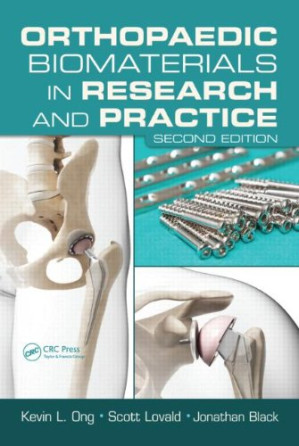

The Implant Architect: Orthopaedic Biomaterials in Research and Practice (2nd Edition)
An orthopedic implant is not simply a piece of hardware; it is a highly engineered biomaterial subjected to relentless mechanical loading and a corrosive, biologically active environment. If the metal is too stiff, it causes stress shielding and bone resorption. If the plastic is too soft, it generates massive osteolytic wear debris. Orthopaedic Biomaterials in Research and Practice, Second Edition is a fiercely technical, engineering-focused manual detailing the absolute vanguard of material science. This volume provides the exact blueprints required to design, test, and understand the materials that rebuild the human skeleton.
Mastering Metallurgy and Polymers
The core philosophy of this text is the precise matching of material properties to biological demands. The authors aggressively detail the phase diagrams of titanium alloys (Ti-6Al-4V) and cobalt-chromium. It dictates exactly how the irradiation and subsequent remelting of Ultra-High-Molecular-Weight Polyethylene (UHMWPE) creates highly cross-linked polymers that virtually eliminate abrasive wear in total hip replacements.
Navigating Biocompatibility and Corrosion
The book provides a masterclass in failure analysis. It dictates the exact electrochemical pathways of fretting and galvanic corrosion at the modular junction of a hip stem and a metal head. It rigorously details the host’s foreign-body response, explaining the macrophage-induced inflammatory cascade triggered by microscopic wear particles that ultimately leads to aseptic loosening.
Frequently Asked Questions (FAQs)
Is this a clinical book for treating patients?
No, it is a biomedical engineering and basic science textbook. It explains the *science* of the implants the surgeon uses.
Who is the primary audience?
It is the absolute, mandatory reference for Biomedical Engineers, Orthopedic Researchers, Implant Designers, and highly academic Orthopedic Surgeons.


