
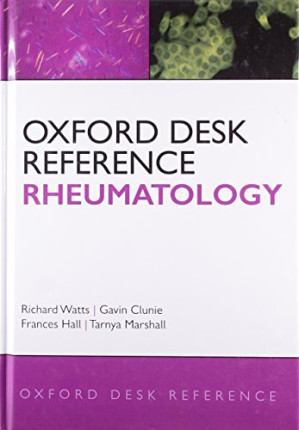


The Rapid-Response Rheumatology Guide: Oxford Desk Reference
When a patient presents to the emergency room with a sudden, massive swelling of their knee, a raging fever, and a history of gout, the attending physician does not have time to read a 2,000-page textbook on purine metabolism. They need to know immediately if the patient has a gout flare or a joint infection that will destroy the cartilage in 24 hours. Oxford Desk Reference: Rheumatology is the definitive, fiercely optimized tactical manual designed for exactly this scenario. For rheumatology fellows, internal medicine physicians, and ER doctors, this pocket-sized volume provides the absolute, uncompromising blueprints required for rapid triage and disease management on the hospital floor.
High-Yield Data Compression for the Clinical Ward
The core philosophy of this desk reference is radical data compression. The authors understand that in a clinical setting, speed is a matter of patient safety. The text completely strips away the deep pathophysiological theory and historical context found in massive encyclopedias. It focuses entirely on what the clinician actually needs to know right now: the exact clinical presentation, the mandatory diagnostic labs, and the immediate pharmacological treatment.
Evidence-Based Algorithms for Joint Pain and Inflammation
This is a fiercely clinical guide. The book is heavily structured around symptom-based algorithms. If a patient presents with “acute monoarthritis” (a single swollen joint), the clinician can instantly follow a flowchart that directs them to perform a joint aspiration, detailing exactly how to analyze the synovial fluid under a microscope to instantly differentiate between uric acid crystals (gout) and a massive bacterial infection.
Navigating Rheumatologic Emergencies
The core of the manual provides a masterclass in preventing death. While most rheumatology is chronic, the authors dedicate critical sections to terrifying emergencies. They provide the exact protocols for recognizing and aggressively treating catastrophic systemic vasculitis, severe lupus flares (nephritis), and the highly lethal Macrophage Activation Syndrome (MAS), ensuring the clinician initiates high-dose steroids and chemotherapy before irreversible organ failure occurs.
Prescribing and Monitoring Complex DMARD Therapies
The final value of this reference is its focus on drug safety. The book heavily utilizes rapid-reference tables for Disease-Modifying Antirheumatic Drugs (DMARDs) and Biologics. The clinician can instantly check the required baseline labs, the exact dosing schedule, and the strict toxicity monitoring parameters for dangerous drugs like Methotrexate, Cyclophosphamide, and TNF-inhibitors.
Frequently Asked Questions (FAQs)
Can I use this instead of a primary textbook for my board exams?
No. The desk reference tells you what to do. The primary textbook (like Kelley and Firestein’s) tells you why you are doing it. You must understand the underlying immunology to pass your exams.
Is the book organized by disease or by symptom?
It brilliantly utilizes both. The initial sections are symptom/algorithm-based for rapid triage, while the later sections provide concise, highly structured monographs for every specific rheumatologic disease.
Who is the primary audience?
It is the absolute, mandatory coat-pocket companion for Rheumatology Fellows, Internal Medicine Residents, and Emergency Room Physicians.
Conclusion
Oxford Desk Reference: Rheumatology proves that brilliant clinical practice requires rapid access to flawless data. It is an indispensable tool for the chaotic hospital ward. By utilizing the rapid-triage algorithms, the emergency protocols, and the rigorous drug-monitoring tables provided in this volume, clinicians can make rapid, life-saving interventions, ensuring absolute safety for every patient they encounter.


