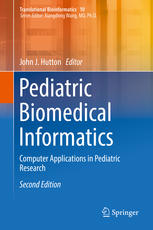


The Digital Frontier of Child Health: Pediatric Biomedical Informatics
The explosion of digital health data has fundamentally altered the landscape of medical research and clinical care. However, pediatrics presents unique computational challenges—from accounting for developmental milestones to protecting the privacy of minors. Pediatric Biomedical Informatics: Computer Applications in Pediatric Research (2nd Edition) is the definitive, fiercely technical textbook exploring the intersection of data science and child health. This volume provides the exact blueprints required to build, implement, and leverage informatics systems to revolutionize pediatric medicine.
Mastering the Intersection of Data Science and Pediatrics
The core philosophy of this text is that adult informatics models cannot simply be scaled down for children. The authors aggressively deconstruct the unique data requirements of pediatrics, including tracking growth charts, managing complex immunization schedules, and integrating data from disparate sources (schools, wearables, and multiple specialists). They detail exactly how to structure databases to accurately reflect the dynamic trajectory of child development.
Navigating Electronic Health Records and Big Data Analytics
The book provides a masterclass in utilizing the Electronic Health Record (EHR) as a research engine. It dictates the exact methodologies for extracting phenotypic data, utilizing natural language processing (NLP) to mine clinical notes, and building massive, multi-institutional pediatric registries. It provides exhaustive details on navigating the intense regulatory and ethical landscape (HIPAA/FERPA) surrounding the secondary use of pediatric data.
Managing Clinical Decision Support Systems in the NICU and PICU
This is a fiercely practical guide to applied clinical informatics. The authors provide rigid frameworks for designing and implementing Clinical Decision Support (CDS) algorithms in high-stakes environments like the NICU and PICU. The text dictates exactly how to utilize predictive analytics and machine learning models to provide early warning scores for neonatal sepsis or pediatric clinical deterioration, directly impacting patient survival.
Integrating Informatics into Genomic Research and Precision Medicine
The final value of this reference is its focus on the future of personalized care. The text provides the exact computational strategies required to manage and interpret the massive datasets generated by next-generation sequencing (NGS). It dictates how bioinformatic pipelines are utilized to identify rare pediatric genetic variants, enabling the transition from broad diagnostic categories to targeted, molecular precision medicine.
Frequently Asked Questions (FAQs)
Does this book require a background in computer programming?
While technically rigorous, it is designed for a multidisciplinary audience. It focuses on the architectural concepts, clinical applications, and research methodologies rather than teaching specific coding languages.
Are there case studies of successful informatics implementations?
Yes, it features detailed analyses of successful pediatric data networks (like PEDSnet) and the deployment of predictive algorithms in leading children’s hospitals.
Who is the primary audience?
It is the absolute, mandatory text for Medical Informaticians, Pediatric Researchers, Chief Medical Information Officers (CMIOs), and Data Scientists working in healthcare.
Conclusion
Pediatric Biomedical Informatics proves that advancing child health requires an uncompromising command of data architecture, advanced analytics, and pediatric-specific clinical logic. It is the indispensable bedrock of modern medical research. By mastering the EHR mining techniques, the CDS implementation strategies, and the genomic data frameworks detailed in this vital volume, professionals can harness the power of big data to cure pediatric disease.