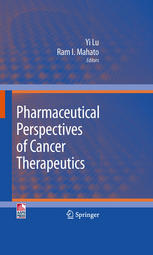

The Pharmacokinetic Gauntlet: Pharmaceutical Perspectives of Cancer Therapeutics
A chemist can design a molecule that perfectly kills cancer cells in a petri dish, but if that molecule dissolves in stomach acid, binds irreversibly to blood proteins, or is instantly destroyed by the liver, it is entirely useless to a human being. Pharmaceutical Perspectives of Cancer Therapeutics is a fiercely technical, brutally practical master manual of drug delivery. This volume provides the exact pharmacokinetic and biomedical engineering blueprints required to force a toxic chemical through the defenses of the human body and directly into the tumor.
Mastering the Liposomal Stealth Coat
The core philosophy of this text is evading the host defenses. The authors aggressively detail the mechanics of nanoparticle pegylation. It dictates exactly how a pharmacologist must wrap a highly toxic chemotherapy drug in a microscopic sphere of fat, and then coat that sphere in polyethylene glycol (PEG), mathematically proving that this stealth coating makes the drug completely invisible to the patient’s immune system, allowing it to circulate for days instead of minutes.
Navigating the Blood-Brain Barrier
The book provides a masterclass in breaking the ultimate fortress. It dictates the exact pharmacological pathways for penetrating the central nervous system. It rigorously explores the maddening reality that 98% of all cancer drugs cannot enter the brain, detailing the complex chemical modifications required to make a molecule lipophilic enough to slip past the tight junctions of the cerebral capillaries to treat glioblastoma.
Frequently Asked Questions (FAQs)
Does this book provide clinical dosing algorithms for practicing nurses?
Absolutely not. It is a strictly specialized *pharmaceutics, pharmacokinetics, and drug design textbook* focused entirely on the physical and chemical engineering of the drug molecule itself.
Who is the primary audience?
It is the absolute, mandatory benchtop reference for Pharmaceutical Scientists, Medicinal Chemists, Bioengineers, and Drug Development Researchers.