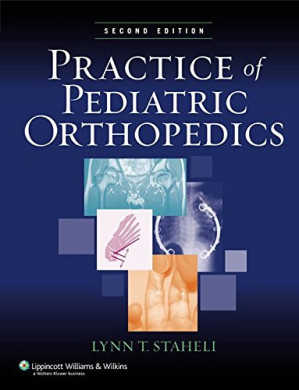
The Pediatric Paradigm: Practice of Pediatric Orthopedics
Treating a child’s musculoskeletal system is completely different from treating an adult’s. A child’s bones are highly plastic, constantly growing from active physes (growth plates), and possessing a massive capacity for remodeling. A fracture pattern that requires immediate surgery in a 40-year-old may require nothing more than a simple cast and observation in a 4-year-old. Practice of Pediatric Orthopedics is a fiercely comprehensive, foundational textbook dedicated to this unique physiology. This volume provides the exact blueprints required to differentiate normal developmental variations from catastrophic pediatric pathology.
Mastering the Growth Plate
The core philosophy of this text is respecting skeletal immaturity. The authors aggressively detail the Salter-Harris classification system for physeal fractures. It dictates exactly how to manage a displaced supracondylar humerus fracture, providing exhaustive, step-by-step algorithms for closed reduction and percutaneous pinning (CRPP) to avoid devastating neurovascular compromise and future angular deformity (cubitus varus).
Navigating Congenital and Neuromuscular Disorders
The book provides a masterclass in complex pediatric reconstruction. It dictates the exact clinical pathways for managing Developmental Dysplasia of the Hip (DDH), from the Pavlik harness in the neonate to the complex pelvic osteotomies (Salter, Pemberton) required in the older child. It rigorously details the immense, multidisciplinary surgical planning required to manage the spasticity and contractures in a child with Cerebral Palsy.
Frequently Asked Questions (FAQs)
Is this a book primarily for pediatricians?
No, while useful for pediatricians, it is a deeply surgical and orthopedic text designed for specialists who actually manage the complex deformities.
Who is the primary audience?
It is the absolute, mandatory core curriculum for Pediatric Orthopedic Surgery Fellows and Orthopedic Residents.