
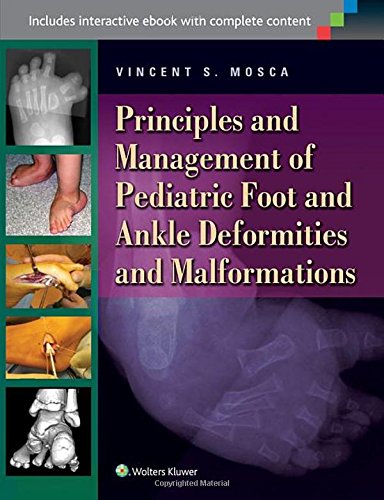



Restoring Mobility: Principles and Management of Pediatric Foot Deformities
The pediatric foot is a complex, rapidly evolving structure. Minor congenital malformations or biomechanical imbalances can rapidly progress into severe, rigid deformities that compromise gait and cause lifelong disability if left untreated. Principles and Management of Pediatric Foot and Ankle Deformities and Malformations is the definitive, fiercely specialized orthopaedic treatise. This volume provides the exact, highly technical blueprints required to diagnose, classify, and surgically reconstruct the most challenging pediatric foot anomalies.
Mastering the Complex Biomechanics of the Pediatric Foot and Ankle
The core philosophy of this text is that successful reconstruction requires absolute mastery of pediatric gait mechanics. The authors aggressively deconstruct the complex interactions between the developing tarsal bones, ligaments, and the dynamic forces of the musculotendinous units. They detail exactly how specific neuromuscular disorders (like cerebral palsy or spina bifida) create predictable, progressive patterns of foot deformity.
Navigating Clubfoot (Talipes Equinovarus) and the Ponseti Method
The book provides a masterclass in the management of congenital clubfoot. It dictates the exact execution of the Ponseti method, providing exhaustive, step-by-step instructions on serial casting techniques, the precise indications for percutaneous Achilles tenotomy, and the rigid bracing protocols required to prevent relapse, firmly establishing this as the gold standard of care.
Managing Flatfoot, Cavus Foot, and Tarsal Coalitions
This is a fiercely practical guide to both common and obscure pathologies. The authors provide rigid diagnostic algorithms for differentiating flexible, physiologic flatfoot (pes planovalgus) from rigid, pathologic flatfoot often caused by tarsal coalitions. The text dictates exactly how to approach the complex, multi-planar reconstruction of the cavovarus foot, detailing the specific osteotomies and tendon transfers required to achieve a plantigrade, stable foot.
Integrating Surgical Reconstruction with Orthotic Management
The final value of this reference is its comprehensive approach to long-term mobility. The text provides the exact protocols for post-operative management and rehabilitation. It dictates when surgical intervention must be augmented with specialized orthoses (AFOs, SMOs) to maintain alignment and optimize function as the child continues to grow.
Frequently Asked Questions (FAQs)
Does this book cover traumatic injuries to the pediatric foot?
Yes, it features critical sections on managing physeal (growth plate) fractures of the ankle and complex midfoot trauma, emphasizing the techniques required to prevent growth arrest.
Are congenital limb deficiencies addressed?
Absolutely. It provides specialized surgical strategies for managing conditions like fibular hemimelia, tibial hemimelia, and congenital longitudinal deficiencies of the foot.
Who is the primary audience?
It is the absolute, mandatory surgical atlas for Pediatric Orthopaedic Surgeons, General Orthopaedic Surgeons, Podiatrists, and Orthopaedic Residents.
Conclusion
Principles and Management of Pediatric Foot and Ankle Deformities proves that restoring function to the pediatric foot requires an uncompromising command of biomechanics, expert casting skills, and meticulous surgical technique. It is the indispensable bedrock of pediatric lower extremity orthopaedics. By mastering the diagnostic algorithms, the Ponseti method, and the reconstructive osteotomies detailed in this essential volume, surgeons can ensure their young patients achieve pain-free, functional mobility.


