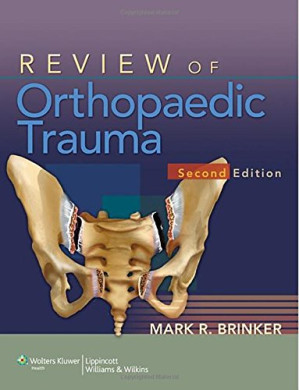


The Traumatologist’s Edge: Review of Orthopaedic Trauma (2nd Edition)
The orthopedic trauma bay is an environment of controlled chaos. When a patient arrives with a shattered pelvis, bilateral femur fractures, and an open tibia, there is no time to consult a thousand-page textbook. The surgeon must rely on instantly accessible, highly consolidated, heavily tested knowledge to execute life-saving and limb-saving interventions. Review of Orthopaedic Trauma (2nd Edition) is a fiercely concise, hyper-yield surgical manual designed specifically for rapid recall. This volume provides the exact blueprints required to dominate the trauma bay and the orthopedic board examinations.
Mastering High-Yield Fracture Mechanics
The core philosophy of this text is absolute surgical efficiency. The authors aggressively strip away esoteric academic debate to focus entirely on actionable trauma algorithms. It dictates exactly how to classify and manage every major fracture type, heavily utilizing the AO/OTA classification system. It provides exhaustive, bulleted protocols for Damage Control Orthopedics (DCO) versus Early Total Care (ETC) in the polytrauma patient.
Navigating Complications and Board Scenarios
The book provides a masterclass in anticipating disaster. It dictates the exact clinical pathways for recognizing and aggressively treating the nightmares of trauma: acute compartment syndrome, fat embolism syndrome, and necrotizing fasciitis. It is rigorously structured to perfectly mirror the brutal realities of the Orthopaedic In-Training Examination (OITE) and the ABOS certification boards.
Frequently Asked Questions (FAQs)
Is this a book to teach a resident how to drill a screw?
No, it is a *cognitive* manual. It teaches the resident *why* to use a specific screw, *when* to operate, and how to answer the attending’s questions correctly in the middle of the night.
Who is the primary audience?
It is the absolute, mandatory study guide and on-call companion for Orthopaedic Surgery Residents, Trauma Fellows, and Board Candidates.