

The Toughest Aspirates: Salivary Gland Cytopathology
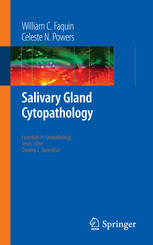
The salivary glands present arguably the most treacherous terrain in all of cytopathology. A fine-needle aspirate (FNA) from the parotid gland might yield a dizzying mix of epithelial, myoepithelial, and stromal cells that overlap significantly between completely benign adenomas and highly lethal carcinomas. A misdiagnosis here often leads to either unnecessary facial nerve sacrifice or a disastrously incomplete cancer resection. Salivary Gland Cytopathology is the definitive, fiercely specialized diagnostic manual dedicated entirely to mastering these complex aspirates. This volume provides the exact blueprints required by cytopathologists to navigate the diagnostic pitfalls of the major and minor salivary glands.
Mastering Biphasic and Basaloid Tumors
The core philosophy of this text is rigorous pattern analysis and the acknowledgment of cytological limitations. The authors aggressively detail the criteria for diagnosing the ubiquitous pleomorphic adenoma, while simultaneously dictating exactly how to recognize when a seemingly benign aspirate actually hides a low-grade carcinoma (like a polymorphous adenocarcinoma). It provides the crucial visual algorithms for navigating “basaloid” aspirates, where distinguishing a benign basal cell adenoma from the deadly adenoid cystic carcinoma is a high-wire diagnostic act.
Navigating the Milan System and Ancillary Testing
The book provides a masterclass in standardized reporting. It dictates the exact clinical pathways for implementing the “Milan System for Reporting Salivary Gland Cytopathology,” ensuring the cytology report provides the surgeon with a clear, statistically validated risk of malignancy. It provides exhaustive reviews of modern ancillary techniques, detailing when to utilize specific immunohistochemical stains on cell blocks or molecular testing (like FISH for MAML2 in mucoepidermoid carcinoma).
Frequently Asked Questions (FAQs)
Does this book cover cystic lesions of the neck?
Yes, it features critical sections on distinguishing benign salivary cysts (like Warthin tumor) from cystic degeneration of a squamous cell carcinoma metastasis.
Who is the primary audience?
It is the absolute, mandatory reference for Cytopathologists, Head and Neck Surgeons (ENT), General Surgical Pathologists, and Pathology Residents.