

The Language of Cells: Textbook of Receptor Pharmacology
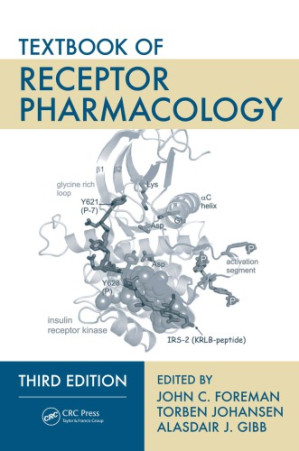
Every single thought in your brain, every beat of your heart, and every breath you take is governed by microscopic proteins sitting on the surface of your cells, waiting for a chemical signal. When a physician prescribes a drug, they are not treating a “disease”; they are sending a highly specific chemical key to unlock or jam one of these microscopic receptors. Textbook of Receptor Pharmacology is the definitive, highly advanced scientific guide to this cellular communication network. For molecular pharmacologists, medicinal chemists, and medical researchers, this volume provides the absolute foundational blueprints required to understand exactly how drugs alter human biology.
Decoding Signal Transduction Pathways
The opening chapters of this book establish the fundamental reality of pharmacology: a drug does not “create” a new function; it only modifies an existing cellular process. The authors provide a rigorous deconstruction of signal transduction. Readers will explore the incredible cascade of events that occurs the millisecond a drug binds to the outside of a cell, tracing the signal down through the cell membrane, into the cytoplasm, and all the way into the nucleus to alter the transcription of DNA.
Agonists, Antagonists, and Allosteric Modulators
The core of the textbook provides a masterclass in receptor dynamics. It moves far beyond the simple “lock and key” analogy. It rigorously details the complex mathematics of receptor binding kinetics and efficacy. Readers will master the vital clinical distinctions between:
- Full Agonists: Drugs that perfectly mimic a natural hormone, activating the receptor to 100% capacity (e.g., Morphine).
- Competitive Antagonists: Drugs that jam the keyhole, completely blocking the natural hormone from activating the cell (e.g., Beta-blockers for high blood pressure).
- Allosteric Modulators: Cutting-edge drugs that bind to a different site on the receptor, subtly changing its shape to make the natural hormone work better (e.g., Benzodiazepines for anxiety).
G Protein-Coupled Receptors (GPCRs): The Master Regulators
The text dedicates massive sections to GPCRs, the target of nearly 50% of all pharmaceutical drugs on the market. It details the complex biochemistry of how these massive, 7-transmembrane proteins activate intracellular G-proteins, triggering the release of secondary messengers like cAMP or Calcium ions to instantly alter cellular function.
Receptor Desensitization and Down-Regulation
Why do addicts need higher and higher doses of a drug to get high? Why do asthma inhalers stop working if used too frequently? The book provides a brilliant neurobiological explanation for “tolerance.” It details the complex mechanisms of receptor desensitization, explaining how a cell will physically pull receptors inside (internalization) or destroy them completely (down-regulation) to protect itself from being over-stimulated by a powerful pharmaceutical drug.
Ion Channels and Nuclear Receptors
Beyond GPCRs, the book explores the lightning-fast world of Ligand-Gated Ion Channels (the targets of anesthetics and anti-epilepsy drugs) and the slow, profound world of Nuclear Receptors (the intracellular targets of steroid hormones and thyroid medications that directly alter genetic expression).
Frequently Asked Questions (FAQs)
Is this a book about specific diseases?
No, it is a foundational, hard-science textbook focused strictly on the molecular biology, biophysics, and mathematical modeling of the receptors themselves, providing the foundation necessary to understand disease treatment.
Is a strong background in biochemistry required?
Absolutely. The text relies heavily on advanced concepts in enzyme kinetics, molecular biology, and complex mathematical dose-response curves.
Who is the primary audience?
It is essential reading for Ph.D. students in pharmacology, industrial drug discovery scientists, and advanced medical students seeking a deeper understanding of how medications actually work.
Conclusion
Textbook of Receptor Pharmacology is the ultimate Rosetta Stone for cellular communication. It proves that the human body is a masterpiece of biochemical engineering. By mastering the complex receptor dynamics and advanced signaling pathways detailed in this volume, scientists can push the boundaries of rational drug design, inventing highly targeted, powerfully effective therapies with absolute molecular precision.