

The Cellular Scaffolding: The Actin Cytoskeleton
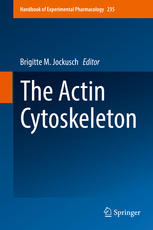
If you strip away the nucleus, the mitochondria, and the cell membrane, what remains is the hidden engine of the human cell: a highly dynamic, microscopic scaffolding known as the cytoskeleton. The Actin Cytoskeleton (Handbook of Experimental Pharmacology) is an exhaustive, highly advanced scientific volume dedicated entirely to the most crucial component of this scaffolding—the actin filament. For molecular biologists, oncologists, and advanced pharmacologists, this textbook provides a masterclass in the biomechanics of cellular movement and the cutting-edge search for drugs that can stop cancer metastasis in its tracks.
The Microscopic Engine of Cellular Movement
The actin cytoskeleton is not a static skeleton; it is a rapidly shifting, highly dynamic network of protein polymers. The opening chapters of this book provide a rigorous biochemical analysis of actin dynamics. Readers will explore the complex thermodynamic processes of actin “treadmilling”—where individual globular actin (G-actin) monomers are rapidly added to one end of a filament and removed from the other. This constant, energy-consuming cycle of polymerization and depolymerization is the literal physical force that allows a cell to change shape, divide, and physically crawl through human tissue.
Pathological Remodeling in Cancer Metastasis
Why is a pharmacology textbook dedicating 500 pages to cellular scaffolding? Because actin dynamics are the primary drivers of cancer metastasis. A benign tumor cell cannot leave its primary site and invade the bloodstream unless it completely hijacks and remodels its actin cytoskeleton. The core of this book explores the complex signaling pathways (such as the Rho GTPase family) that cancer cells mutate to achieve this hyper-motility. Understanding these pathways is the absolute key to designing drugs that can paralyze a cancer cell, rendering it incapable of spreading.
Targeting Actin Dynamics for Novel Therapeutics
The text provides a comprehensive review of the pharmacological agents designed to target actin. It explores the immense challenge of this approach: because actin is essential for the survival of every cell in the human body (especially the heart muscle), developing a drug that targets cancer-cell actin without causing lethal cardiac toxicity is incredibly difficult. The authors detail the cutting-edge medicinal chemistry aimed at targeting the specific, mutated regulatory proteins (like formins or Arp2/3 complexes) that control actin exclusively in malignant cells.
Cytoskeletal Toxins and Pharmacological Probes
Much of our foundational knowledge of actin was derived from deadly natural toxins. The book features fascinating chapters on compounds like Phalloidin (from the “Death Cap” mushroom) which irreversibly stabilizes actin filaments, and Latrunculin (from sea sponges) which completely destroys them. The text details how these lethal toxins have been ingeniously repurposed by molecular biologists as highly precise pharmacological probes and fluorescent markers to visualize and manipulate the cytoskeleton in the laboratory.
Frequently Asked Questions (FAQs)
Does this book cover microtubules or intermediate filaments?
While they are briefly mentioned in the context of cellular cross-talk, this specific volume of the Handbook is laser-focused exclusively on the actin microfilament network.
Is this book suitable for undergraduate biology students?
The depth of the structural biology, biochemistry, and advanced pharmacology makes this text primarily suited for graduate students, post-doctoral researchers, and principal investigators.
Are cardiovascular applications discussed?
Yes, the book explores the critical role of actin-myosin interactions in cardiac and smooth muscle contraction, detailing the pharmacology of drugs designed to alter cardiac contractility.
Conclusion
The Actin Cytoskeleton is a monumental work of cellular biology and pharmacology. It proves that the future of oncology and targeted therapeutics requires a profound understanding of the physical, biomechanical forces that govern cellular life. By mastering the incredibly complex molecular dynamics detailed in this volume, scientists can design the next generation of highly targeted drugs capable of paralyzing malignant cells and halting the deadly spread of cancer.