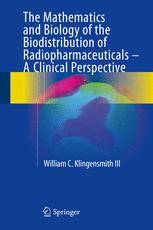


Tracing the Invisible: The Mathematics and Biology of the Biodistribution of Radiopharmaceuticals
The field of nuclear medicine represents one of the most astonishing intersections of quantum physics, advanced mathematics, and human biology. By attaching radioactive isotopes to specific biological molecules, scientists can literally visualize the invisible biochemical processes occurring deep within the human body in real-time. The Mathematics and Biology of the Biodistribution of Radiopharmaceuticals is an exhaustive, highly advanced textbook that bridges these complex disciplines. For radiochemists, nuclear medicine physicians, medical physicists, and pharmacokineticists, this volume is the definitive guide to understanding exactly how and why these radioactive tracers move through the human body.
The Intersection of Nuclear Physics and Human Biology
A radiopharmaceutical is a unique dual-entity: it possesses a biological component (the vector) that targets a specific organ or tumor, and a radioactive component (the isotope) that emits detectable radiation. The opening chapters of this book provide a rigorous grounding in both sides of this equation. It explores the fundamental physics of radioactive decay (alpha, beta, and gamma emission), the biological mechanisms of receptor binding, and the complex challenge of ensuring the radioactive isotope remains firmly attached to the biological vector while traveling through the harsh environment of the bloodstream.
Understanding Radiotracers and Isotopes
The text provides a comprehensive analysis of the most crucial isotopes utilized in modern medicine, including Technetium-99m, Fluorine-18, Iodine-131, and Gallium-68. Readers will learn the specific physical half-lives of these isotopes and how they must perfectly align with the biological half-life of the vector molecule. If the isotope decays too quickly, the image is lost before the drug reaches the tumor; if it decays too slowly, the patient is exposed to unnecessary, dangerous levels of ionizing radiation.
The Mathematical Modeling of Biodistribution
The core of this textbook is its brilliant, unapologetically rigorous treatment of mathematical modeling. Biodistribution is not a guessing game; it is a highly predictable science based on differential equations. The book guides the reader through complex Compartmental Analysis, modeling the human body as a series of interconnected mathematical compartments (e.g., blood plasma, extracellular fluid, specific organs, and tumors). By applying advanced pharmacokinetic principles, researchers can calculate precise transfer rate constants, allowing them to mathematically predict the exact percentage of the injected radioactive dose that will accumulate in a tumor versus the liver or kidneys over time.
Applications in PET and SPECT Imaging
This mathematical modeling is absolutely vital for modern diagnostic imaging. The book explores the application of these principles in Positron Emission Tomography (PET) and Single-Photon Emission Computed Tomography (SPECT). It details the mathematical algorithms required to translate the raw radiation counts detected by the scanner into the stunning, three-dimensional, quantitative biological images utilized by oncologists and neurologists to diagnose cancer, Alzheimer’s disease, and myocardial ischemia.
Targeted Radionuclide Therapy in Oncology
Beyond diagnostics, the book delves into the revolutionary field of Targeted Radionuclide Therapy (Theranostics). This involves utilizing the exact same biological vector, but swapping the diagnostic isotope for a highly destructive, cell-killing isotope (like Lutetium-177 or Yttrium-90). The text provides the advanced dosimetry models required to calculate the exact radiation absorbed dose (in Grays) delivered to a tumor, ensuring maximum cancer cell destruction while mathematically guaranteeing the safety of healthy organs (like the bone marrow and kidneys).
Frequently Asked Questions (FAQs)
Is this book highly mathematical?
Yes, it is designed for specialists. Readers should have a firm grasp of differential equations, calculus, and advanced pharmacokinetics to fully utilize the compartmental modeling chapters.
Does it cover the synthesis of radiopharmaceuticals?
While it briefly touches on radiochemistry and cyclotron production, the primary focus is squarely on what happens to the drug after it is injected into the biological system.
Who is the primary audience for this text?
It is an essential reference for medical physicists, research pharmacokineticists, and nuclear medicine residents training in advanced quantitative dosimetry.
Conclusion
The Mathematics and Biology of the Biodistribution of Radiopharmaceuticals is a tour de force of scientific synthesis. It proves that the safe and effective use of nuclear medicine requires far more than just biology—it requires mathematical perfection. By mastering the advanced modeling techniques detailed in this book, scientists and clinicians can push the boundaries of molecular imaging and targeted radiotherapy, providing unprecedented diagnostic clarity and life-saving treatments to patients worldwide.