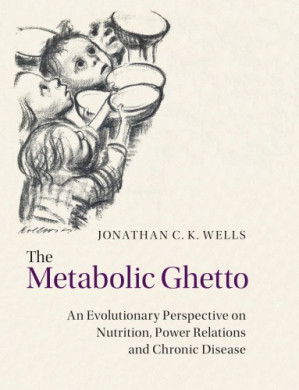



The Evolutionary Perspective: The Metabolic Ghetto
Modern metabolic diseases—such as type 2 diabetes, obesity, and cardiovascular disease—are often viewed as simple failures of individual willpower. However, evolutionary biology reveals a deeper truth: these conditions are heavily driven by the mismatch between our ancestral genetics and modern socio-economic power structures. The Metabolic Ghetto: An Evolutionary Perspective on Nutrition, Power Relations and Chronic Disease is a paradigm-shifting academic master text exploring reproductive, developmental, and evolutionary biochemistry.
Mastering Evolutionary Mismatch and Epigenetics
The core philosophy of this text is the Barker hypothesis applied to social inequality. The authors detail how maternal nutritional stress, environmental toxins, and chronic psychosocial pressure epigenetically reprogram the fetus in utero, shunting energy resources to guarantee short-term survival while wiring the adult physiology for chronic metabolic disease.
Navigating Power Relations and Chronic Pathology
The book integrates evolutionary biology, anthropology, and socio-economics, demonstrating how political and industrial food systems create “metabolic ghettos” of disease, providing public health researchers with a unique, comprehensive framework for disease prevention.
Frequently Asked Questions (FAQs)
Is this a clinical diet book for weight loss?
No, it is a highly specialized *evolutionary biology, developmental epigenetics, and public health textbook* on the origins of metabolic disease.
Who is the primary audience?
It is an essential read for Evolutionary Biologists, Epidemiologists, Public Health Officers, Anthropologists, and Cardiologists.