The Arthroplasty Engineer: Total Hip Arthroplasty: Tribological Considerations
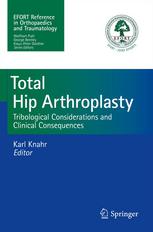
Total Hip Arthroplasty (THA) replaces a diseased joint with metal, plastic, or ceramic components. The long-term survival of this implant depends entirely on “tribology”—the science of friction, wear, and lubrication between these interacting surfaces. Total Hip Arthroplasty: Tribological Considerations and Clinical Consequences – 2013 Edition is a fiercely technical, heavily material-science-focused manual detailing the physics of joint replacement. This volume provides the exact blueprints required to select implants that will survive decades of cyclical loading.
Mastering the Bearing Surface
The core philosophy of this text is minimizing volumetric wear. The authors aggressively detail the material properties of different bearing couples. It dictates exactly why highly cross-linked polyethylene (HXLPE) wears significantly less than conventional plastic, and analyzes the extreme hardness and catastrophic fracture risks associated with ceramic-on-ceramic articulations.
Navigating Wear Debris and Osteolysis
The book provides a masterclass in implant failure. It dictates the exact biological pathways of osteolysis. It rigorously details how microscopic plastic wear particles generated by the implant trigger a massive macrophage response in the body, leading to the resorption (melting away) of the surrounding bone and the eventual catastrophic loosening of the implant.
Frequently Asked Questions (FAQs)
Is this a surgical technique manual (how to do the operation)?
No, it is a *materials science and biomechanics* book. It focuses on the physics of the implants rather than the surgical approach.
Who is the primary audience?
It is the absolute, mandatory reference for Arthroplasty Surgeons, Biomedical Engineers, and Implant Design Scientists.