
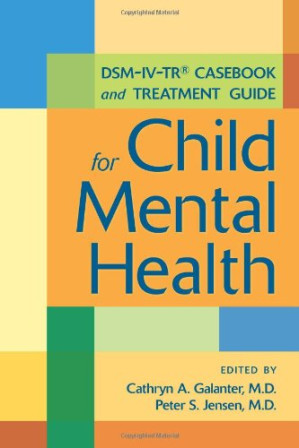

Diagnostic Clarity: DSM-IV-TR Casebook and Treatment Guide for Child Mental Health
Diagnosing mental health disorders in children is immensely challenging. Symptoms overlap, children struggle to articulate internal distress, and normal developmental variations often mimic pathology. A list of criteria in a manual is rarely sufficient for clinical practice; clinicians need to see how these disorders present in real life. DSM-IV-TR Casebook and Treatment Guide for Child Mental Health is the definitive, fiercely practical resource designed to bridge the gap between diagnostic criteria and clinical reality. This volume provides the exact, nuanced clinical vignettes required by mental health professionals to accurately diagnose and effectively treat pediatric psychiatric disorders.
Mastering Psychiatric Diagnosis Through Clinical Vignettes
The core philosophy of this text is pattern recognition through storytelling. The authors aggressively move beyond dry checklists, providing rich, detailed case studies of children presenting with complex symptoms. They dictate exactly how an expert clinician dissects a patient’s history, family dynamics, and school reports to differentiate between disorders that share similar features, such as distinguishing severe ADHD from early-onset bipolar disorder.
Navigating ADHD, Autism, and Mood Disorders in Youth
The book provides a masterclass in core pediatric pathologies. It dictates the exact diagnostic nuances of Attention-Deficit/Hyperactivity Disorder across different age groups. It provides exhaustive case examples illustrating the wide spectrum of Pervasive Developmental Disorders (Autism) and details the specific, often atypical ways that major depression and anxiety manifest in children compared to adults.
Managing Complex Presentations and Comorbidities
This is a fiercely practical guide to real-world psychiatry. Children rarely present with a single, “textbook” disorder. The authors provide rigid frameworks for managing high rates of comorbidity. The text dictates exactly how to prioritize treatment when a child presents with a combination of Oppositional Defiant Disorder (ODD), anxiety, and learning disabilities, ensuring interventions are sequenced logically and effectively.
Integrating Psychopharmacology with Behavioral Interventions
The final value of this reference is its comprehensive treatment planning. The text does not stop at diagnosis; it dictates the evidence-based management strategy for each case. It ensures that clinicians understand how to seamlessly integrate specific psychopharmacological agents with targeted psychotherapy (e.g., CBT, Parent Management Training), emphasizing a holistic, multimodal approach.
Frequently Asked Questions (FAQs)
Does this book address trauma and stressor-related disorders?
Yes, it features critical sections on Post-Traumatic Stress Disorder (PTSD) and Reactive Attachment Disorder (RAD), dictating how severe early adversity shapes a child’s clinical presentation and therapeutic needs.
Are there specific discussions on the limitations of the DSM criteria for children?
Absolutely. The authors provide explicit, critical analysis of where the DSM-IV-TR falls short in pediatric populations, guiding clinicians on how to use clinical judgment when a child’s suffering doesn’t perfectly fit a diagnostic box.
Who is the primary audience?
It is the absolute, mandatory clinical guide for Child and Adolescent Psychiatrists, Psychologists, Clinical Social Workers, and Pediatricians.
Conclusion
DSM-IV-TR Casebook and Treatment Guide for Child Mental Health proves that psychiatric diagnosis is an art built on rigorous clinical observation. It is the indispensable bedrock of pediatric mental health training. By mastering the diagnostic nuances, the comorbidity management, and the integrated treatment plans detailed in this vital volume, clinicians can bring clarity to complex cases and provide life-altering care to struggling children.


