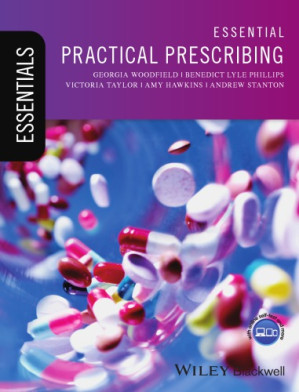

Surviving the Wards: Essential Practical Prescribing
The transition from a medical student in a classroom to a junior doctor on a chaotic hospital ward is terrifying. For four years, students learn the deep theoretical science of pharmacology, but they are rarely taught the actual, physical mechanics of writing a flawless, legally binding prescription for a critically ill patient at 3:00 AM. Essential Practical Prescribing is the definitive, uncompromising survival guide designed to bridge that dangerous gap. For junior doctors, medical students, and prescribing nurses, this rapid-reference manual provides the exact, actionable protocols required to safely prescribe medication in the real world.
Bridging the Gap Between Theory and the Prescription Pad
The opening chapters of this book strip away the theoretical fluff. The authors establish that in a hospital, a poorly written prescription is just as dangerous as the wrong drug. The text details the strict legal architecture of a prescription chart, teaching the junior doctor exactly where to write the dose, the route (IV vs. PO), and the frequency, ensuring that the critical care nurse never misinterprets the order and accidentally kills the patient.
Rapid Navigation of the British National Formulary (BNF)
While this book is heavily utilized in the UK (relying on the BNF), its core principles are universal. The guide teaches the clinician how to aggressively and efficiently utilize national drug formularies. It trains the doctor to rapidly scan for the three most critical pieces of information before signing their name: severe drug interactions, absolute contraindications, and mandatory dosing adjustments for acute renal failure.
Managing High-Risk Medications
The core of the manual provides a masterclass in prescribing the hospital’s most dangerous drugs. The authors dedicate massive sections to Insulin and Anticoagulants (like Warfarin and Heparin). Readers will learn the exact, step-by-step algorithms for writing a sliding-scale insulin chart for a diabetic patient who is NPO (nothing by mouth) for surgery, and the strict protocols for initiating and monitoring an IV Heparin infusion without causing a catastrophic hemorrhage.
Avoiding the Most Common and Lethal Prescribing Errors
This is a book built on the mistakes of others. The text provides a rigorous analysis of the most common, often lethal prescribing errors made by junior doctors. It heavily highlights the danger of trailing zeros (writing “5.0 mg” instead of “5 mg,” which a nurse might misread as “50 mg”) and the catastrophic consequences of prescribing penicillin to a patient whose chart clearly states a severe allergy.
Prescribing in Special Populations
The final chapters address the terror of prescribing for vulnerable populations. The authors provide strict, evidence-based guidance for prescribing in pregnancy, detailing which drugs cause devastating birth defects. Furthermore, it provides the exact mathematical formulas required to safely calculate weight-based dosing for critically ill pediatric patients, where a single mathematical error can be instantly fatal.
Frequently Asked Questions (FAQs)
Is this book only for UK doctors?
While it references UK guidelines (NICE and BNF), the fundamental safety protocols, math calculations, and high-risk drug management strategies are universally applicable to any hospital in the world.
Does it cover IV fluid prescribing?
Yes, it features a highly practical section on prescribing maintenance and resuscitation IV fluids, teaching doctors how to calculate daily sodium, potassium, and water requirements.
Who is the primary audience?
It is the ultimate pocket companion for final-year medical students, Foundation Year (FY1/FY2) junior doctors, and newly qualified prescribing nurse practitioners.
Conclusion
Essential Practical Prescribing brings absolute order to the chaos of the hospital ward. It proves that a doctor’s signature on a prescription pad is a profound legal and ethical responsibility. By adhering to the strict formatting rules, rigorous safety checks, and high-risk drug protocols detailed in this manual, junior clinicians can confidently take control of patient care, completely eliminating the terrifying prescribing errors that cost lives.