

Controlling the Metronome: Heart Rate and Rhythm
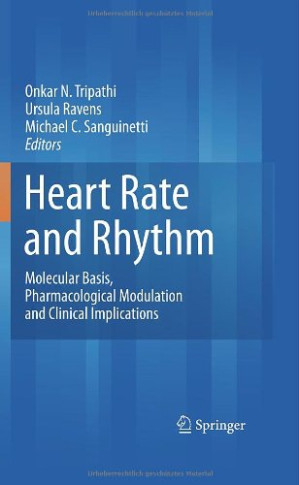
The human heart is not merely a mechanical pump; it is a highly advanced, flawlessly synchronized electrical circuit. When that circuit misfires, the result is an arrhythmia—a chaotic, uncoordinated quivering of the heart muscle that can rapidly lead to sudden cardiac death. Attempting to fix this electrical chaos with pharmaceutical drugs is one of the most dangerous and complex tasks in modern medicine. Heart Rate and Rhythm: Molecular Basis, Pharmacological Modulation and Clinical Implications is the definitive textbook bridging the gap between cardiac biophysics and clinical cardiology. For electrophysiologists, clinical cardiologists, and critical care pharmacists, this volume provides the absolute mastery of cardiac ion channels required to safely prescribe antiarrhythmic medications.
The Molecular Biophysics of the Cardiac Action Potential
To fix the electrical circuit, you must understand how it generates power. The opening chapters provide a rigorous, graduate-level deconstruction of the Cardiac Action Potential. The authors move past basic anatomy, diving into the sub-microscopic physics of the myocyte cell membrane. Readers will explore the precise, millisecond-by-millisecond opening and closing of voltage-gated Sodium, Calcium, and Potassium channels, understanding exactly how the flow of these specific ions generates the massive electrical current required to force the heart to beat.
The Vaughan-Williams Classification of Antiarrhythmics
The core of the textbook is an exhaustive analysis of the primary weapon against arrhythmias: the Vaughan-Williams drug classification system. The text provides a masterclass in the specific pharmacology of each class, detailing exactly how Class I (Sodium Channel Blockers like Flecainide), Class II (Beta-Blockers like Metoprolol), Class III (Potassium Channel Blockers like Amiodarone), and Class IV (Calcium Channel Blockers like Diltiazem) physically alter the shape, duration, and speed of the cardiac electrical signal.
The Proarrhythmic Danger of Antiarrhythmic Drugs
This is perhaps the most crucial section of the book. It addresses the terrifying paradox of antiarrhythmic therapy: the drugs used to stop arrhythmias frequently cause new, deadlier arrhythmias. The authors provide a rigorous deconstruction of “Proarrhythmia.” They detail the exact biophysics of how a Class III drug (like Sotalol) prolongs the QT interval on an EKG, predisposing the patient to Torsades de Pointes—a highly lethal ventricular tachycardia caused by the very medication meant to protect the heart.
Pharmacological Modulation of Atrial Fibrillation
The text dedicates massive space to the most common arrhythmia in the world: Atrial Fibrillation (AFib). It provides highly actionable, evidence-based clinical algorithms for managing this complex disease. Readers will learn the strict criteria for choosing between a “Rate Control” strategy (using beta-blockers or digoxin to simply slow the heart down) versus a “Rhythm Control” strategy (using powerful, toxic drugs like Amiodarone to forcefully shock the heart back into a normal sinus rhythm).
Advanced Clinical Implications and Device Integration
The final chapters explore the reality of modern cardiology, where drugs are rarely used in isolation. The authors detail the complex interplay between antiarrhythmic medications and implantable cardiac devices (like Pacemakers and ICDs). They explain how a specific drug might dangerously increase the amount of electrical voltage the pacemaker needs to successfully shock the heart, requiring careful reprogramming of the device whenever the medication is altered.
Frequently Asked Questions (FAQs)
Does this book cover emergency ACLS protocols?
While it explains the pharmacology behind the drugs used in a “Code Blue” (like Amiodarone and Epinephrine), it is a textbook of deep biophysics and chronic management, not a rapid-response field manual.
Is a strong background in physics required?
Yes. A profound understanding of cellular electrophysiology, membrane capacitance, and ion gradients is necessary to fully grasp the mechanisms presented.
Who should read this book?
It is the ultimate reference for cardiology fellows training in electrophysiology, academic researchers developing new cardiac drugs, and clinical pharmacists managing complex cardiovascular wards.
Conclusion
Heart Rate and Rhythm is the ultimate guide to the electrical architecture of human life. It proves that prescribing an antiarrhythmic is never a simple decision; it is a high-stakes manipulation of cardiac biophysics. By mastering the advanced ion channel pharmacology and complex EKG interpretations detailed in this volume, cardiologists can confidently control the chaotic metronome of the failing heart, preventing sudden death and restoring perfect, rhythmic function.


