
The Microscopic Frontier: Fine Particles in Medicine and Pharmacy
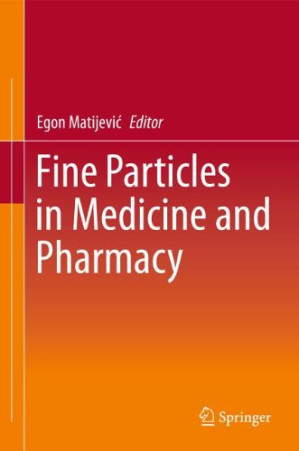
The pharmaceutical industry frequently operates on a scale invisible to the naked eye. The physical size of a drug particle—whether it is a massive 50-micron crystal or a microscopic 50-nanometer sphere—dictates exactly how that drug will behave in the human body, how it will be manufactured in a factory, and whether it will ultimately cure the patient or kill them. Fine Particles in Medicine and Pharmacy is the definitive, fiercely technical textbook exploring the cutting-edge physics and engineering of particulate drug delivery. For formulation chemists, inhalation toxicologists, and industrial bioengineers, this volume provides the absolute blueprints required to manipulate the physics of the microscopic world.
The Physics of Particulate Delivery Systems
The opening chapters of this book plunge directly into advanced aerosol physics and powder mechanics. The authors provide a rigorous deconstruction of aerodynamic diameter. They explain that a particle’s physical size is only half the story; its density and shape dictate how it will flow through the air and interact with human tissue. Readers will master the complex mathematics of particle settling, Brownian motion, and electrostatic charge—forces that dominate at the microscopic scale.
Pulmonary Drug Delivery (Dry Powder Inhalers)
The core of the textbook focuses on the most challenging application of fine particles: delivering drugs directly into the deep lungs. The book provides a masterclass in the engineering of Dry Powder Inhalers (DPIs) and Metered Dose Inhalers (MDIs). It details the incredibly precise aerodynamic engineering required to manufacture a drug particle exactly between 1 and 5 microns in size. If the particle is 6 microns, it hits the back of the throat and is swallowed; if it is 0.5 microns, the patient simply exhales it back out. Perfection is mandatory.
Nanoparticle Toxicity and Clearance Mechanisms
As particles get smaller, they become significantly more dangerous. The text provides a rigorous review of nanotoxicology. It explores the terrifying reality that nanoparticles are so small they can bypass the body’s natural defenses, crossing the blood-brain barrier or embedding themselves permanently deep within lung tissue. The authors detail the advanced biological clearance mechanisms (like alveolar macrophage phagocytosis) the body uses to destroy inhaled particles, and how formulation engineers must design drugs to avoid triggering massive pulmonary inflammation.
Targeted Oncology with Metallic and Magnetic Particles
The book pushes into the absolute frontier of advanced medicine. It explores the utilization of heavy metal nanoparticles (like gold) and iron oxide magnetic particles in oncology. Readers will learn how these highly engineered, microscopic metal spheres can be injected into the bloodstream, magnetically steered to the exact location of a tumor, and then heated up using an external magnetic field to literally cook the cancer cells from the inside out (hyperthermia therapy) without damaging the surrounding healthy tissue.
Industrial Scale-Up (Milling and Spray Drying)
The final chapters address the harsh reality of commercial manufacturing. Making a perfect nanoparticle in a tiny lab beaker is easy; making millions of them in a massive sterile facility is incredibly difficult. The authors provide exhaustive engineering protocols for advanced jet milling (using supersonic air to smash crystals into dust) and spray drying (using massive heat chambers to instantly flash-freeze liquid droplets into perfect, hollow microscopic spheres).
Frequently Asked Questions (FAQs)
Is this book relevant for environmental science?
Yes, the fundamental aerosol physics detailed in the opening chapters are highly relevant for toxicologists studying the health impacts of industrial air pollution (PM2.5) and diesel exhaust particles.
Does it cover the formulation of liposomes?
While focused primarily on solid particles (crystals and polymers), it includes extensive sections on lipid-based nanoparticulate systems used for delivering fragile mRNA vaccines.
Is a background in engineering required?
Absolutely. This is a highly technical text requiring a profound understanding of fluid dynamics, thermodynamics, and physical chemistry.
Conclusion
Fine Particles in Medicine and Pharmacy proves that in the world of modern medicine, size truly matters. It is an indispensable guide to the microscopic engineering that dictates pharmaceutical success or failure. By mastering the advanced aerosol physics and complex manufacturing technologies detailed in this volume, scientists can design the next generation of targeted nanomedicines and highly efficient pulmonary inhalers, revolutionizing how drugs are delivered to the human body.