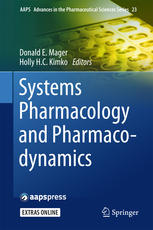
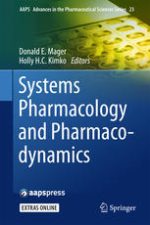

Holistic Drug Discovery: Systems Pharmacology and Pharmacodynamics
For decades, pharmaceutical research was dominated by reductionism: isolating a single receptor in a test tube, finding a chemical that binds to it, and hoping it cures the disease. While this approach yielded many successes, it is failing drastically against complex, multi-factorial diseases like Alzheimer’s, diabetes, and metastatic cancer. Systems Pharmacology and Pharmacodynamics represents the paradigm shift required to overcome this failure. This highly advanced, mathematically rigorous textbook introduces the concept of “network biology” to drug discovery. For quantitative pharmacologists, computational biologists, and pharmaceutical executives, it is the definitive blueprint for the future of holistic drug development.
Moving Beyond Single-Target Reductionism
The opening chapters of the book deconstruct the limitations of the traditional “magic bullet” theory of pharmacology. The authors explain that the human body is an infinitely complex, highly robust network of interacting proteins, genes, and metabolic pathways. When a drug alters one node in this network, the system inevitably adapts, utilizing bypass pathways and feedback loops that often render the drug completely ineffective (a primary cause of chemotherapy resistance). Systems pharmacology demands that researchers stop looking at single receptors and start modeling the entire biological network.
Mathematical Modeling of Drug-Receptor Interactions
This is not a biology book; it is a book of applied mathematics. The core of the text provides a masterclass in Pharmacokinetic/Pharmacodynamic (PK/PD) modeling. Readers will learn how to construct complex sets of differential equations that accurately describe the time-course of a drug’s concentration in the blood (PK) and mathematically link it to the time-course of the actual physiological response (PD). These advanced mathematical models allow researchers to perfectly optimize dosing schedules before a drug ever enters a human clinical trial.
Predicting Off-Target Toxicities In Silico
One of the greatest financial risks in the pharmaceutical industry is a drug failing in late-stage clinical trials due to unexpected, dangerous side effects. Systems pharmacology offers a solution. The book explores how massive computational models and “network pharmacology” can map every single protein a drug might interact with in the human body. By running in silico (computer-simulated) trials, toxicologists can accurately predict severe off-target toxicities (like fatal cardiac arrhythmias or liver failure) years before the first physical pill is ever manufactured.
The Future of Personalized Medicine
The final chapters explore the ultimate goal of systems pharmacology: precision medicine. By integrating massive datasets from genomics, proteomics, and metabolomics into their mathematical models, scientists can move away from “average patient” dosing. The text details how these systems-level models can be utilized to predict exactly how a specific individual patient, with their unique genetic mutations and specific tumor profile, will respond to a complex combination of pharmaceutical drugs.
Frequently Asked Questions (FAQs)
Is a strong background in mathematics required?
Absolutely. This text relies heavily on differential equations, advanced statistics, and computational modeling. It is designed for quantitative scientists, not general clinicians.
Does it cover the use of artificial intelligence in drug discovery?
Yes, the book explores how machine learning algorithms and advanced bioinformatics are utilized to process the massive “Big Data” sets required to construct accurate systems-level biological models.
Who is the primary audience for this text?
It is essential reading for computational biologists, pharmacokineticists, and any research scientist involved in translational medicine and early-stage drug discovery.
Conclusion
Systems Pharmacology and Pharmacodynamics is a brilliant, uncompromisingly rigorous look at the future of medicine. It proves that to cure complex diseases, we must utilize complex mathematics. By mastering the network modeling and quantitative PK/PD principles detailed in this book, scientists can eliminate the costly trial-and-error of traditional drug discovery, designing highly precise, flawlessly optimized therapies that acknowledge and conquer the true complexity of human biology.