Targeting the Catalysts: Enzyme Inhibition in Drug Discovery and Development
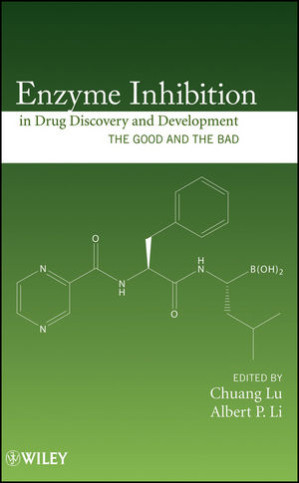
If you look at the top 100 most prescribed drugs in the world—from cholesterol-lowering statins to pain-relieving NSAIDs to life-saving HIV antivirals—you will notice a striking pattern: the vast majority of them work by blocking a single biological enzyme. Enzyme Inhibition in Drug Discovery and Development: The Good and the Bad is a masterclass in this foundational pillar of pharmaceutical science. For medicinal chemists, pharmacologists, and drug discovery researchers, this highly advanced textbook provides the definitive guide to designing molecules that selectively shut down the microscopic catalysts that drive human disease.
Enzymes as the Ultimate Drug Targets
Enzymes are the biological machines that accelerate the chemical reactions necessary for life (and disease). The opening chapters provide a rigorous grounding in enzyme kinetics (the Michaelis-Menten model) and the thermodynamics of transition states. The book explains why enzymes make such incredible drug targets: they possess highly specific, three-dimensional “active sites.” By designing a drug molecule (an inhibitor) that perfectly mimics the shape of the enzyme’s natural substrate, a chemist can plug that active site, instantly halting the disease-causing chemical reaction.
Reversible vs. Irreversible Inhibition
The core of the textbook provides a deep, mathematical, and structural analysis of the different strategies of enzyme inhibition. Readers will explore:
- Competitive Inhibition: Designing drugs that reversibly battle the natural substrate for access to the active site (e.g., ACE inhibitors for hypertension).
- Allosteric Inhibition: Designing clever molecules that bind to a different, secondary site on the enzyme, changing the enzyme’s shape and shutting it down without having to compete with massive amounts of natural substrate.
- Irreversible “Suicide” Inhibitors: The high-stakes design of drugs that bind covalently and permanently to the enzyme, completely destroying it (e.g., aspirin irreversibly inhibiting the COX enzyme, or penicillin irreversibly destroying bacterial cell wall enzymes).
The “Good”: Curing Disease via Enzyme Blockade
The “Good” in the book’s title refers to the miraculous clinical successes of this approach. The text provides breathtaking case studies in rational drug design, detailing how scientists mapped the 3D crystal structure of the HIV protease enzyme and utilized that blueprint to design highly specific protease inhibitors, transforming HIV from a rapid death sentence into a manageable chronic condition.
The “Bad”: Unintended Off-Target Toxicity
The “Bad” explores the dark side of enzyme inhibition: lack of specificity. If a drug designed to inhibit a cancer-causing kinase accidentally inhibits a similar, essential kinase in the heart muscle, the patient will suffer catastrophic cardiac toxicity. The authors provide advanced chemical strategies for optimizing molecular selectivity, ensuring the drug hits the intended target and nothing else.
Navigating Cytochrome P450 Drug Interactions
Perhaps the most critical, dangerous form of “bad” enzyme inhibition occurs in the liver. The book dedicates extensive space to the Cytochrome P450 (CYP450) enzyme system, responsible for metabolizing the vast majority of pharmaceutical drugs. It explains the lethal danger of drug-drug interactions, detailing how one drug might inadvertently inhibit a CYP450 enzyme, causing a second drug to build up to massive, highly toxic levels in the patient’s bloodstream.
Frequently Asked Questions (FAQs)
Is this book highly mathematical?
Yes, readers must have a firm grasp of calculus and advanced biochemistry to fully utilize the sections on enzyme kinetics and calculation of inhibition constants (Ki and IC50).
Does it cover computational chemistry?
Absolutely. It details how modern medicinal chemists utilize in silico molecular docking software and supercomputers to virtually screen millions of potential enzyme inhibitors before synthesizing them in the lab.
Who is the primary audience?
This is an advanced text meant for graduate-level medicinal chemists, structural biologists, and professional research scientists working in the early stages of the pharmaceutical pipeline.
Conclusion
Enzyme Inhibition in Drug Discovery and Development is a tour de force of molecular engineering. It proves that the ability to selectively halt a single enzymatic reaction is the most powerful tool in modern medicine. By mastering the complex chemistry, kinetics, and structural biology detailed in this volume, scientists can push the boundaries of rational drug design, creating a new generation of incredibly potent and flawlessly safe pharmaceutical cures.