
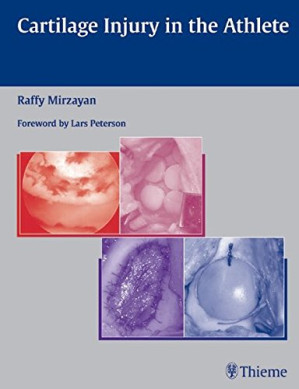
The Chondral Defect: Cartilage Injury in the Athlete
Hyaline cartilage is the teflon-like coating of a joint; it is perfectly frictionless but avascular, meaning once it is gouged or torn by high-energy athletic trauma, it cannot heal itself. A 20-year-old athlete with a full-thickness cartilage defect is staring down the barrel of early, crippling osteoarthritis. Cartilage Injury in the Athlete is a fiercely specialized, highly biological surgical atlas designed to intercept this degenerative cascade. This volume provides the exact blueprints required to biologically patch, regrow, and salvage the athletic joint.
Mastering Cartilage Assessment
The core philosophy of this text is that all cartilage defects are not equal. The authors aggressively detail the International Cartilage Repair Society (ICRS) grading system. It dictates exactly how to use high-resolution, T2-mapping MRI to measure the exact square millimeter size of the defect and, crucially, to determine if the underlying subchondral bone has also failed.
Navigating Biological Reconstruction
The book provides a masterclass in joint preservation surgery. It dictates the exact surgical pathways based on defect size. For small lesions, it details the microfracture technique (drilling the bone to release marrow stem cells). For massive lesions, it exhaustively details Matrix-Induced Autologous Chondrocyte Implantation (MACI) and osteochondral allograft transplantation (OATS)—literally transplanting fresh, living cartilage and bone from a cadaver donor to reconstruct the athlete’s knee.
Frequently Asked Questions (FAQs)
Is this a book about total joint replacement?
Absolutely not. It is about doing everything biologically and surgically possible to *prevent* a young athlete from ever needing a joint replacement.
Who is the primary audience?
It is the absolute, mandatory surgical manual for Orthopedic Sports Medicine Surgeons, Joint Preservation Specialists, and advanced Physical Therapists.


