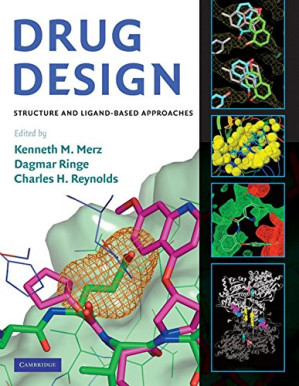

The Architectural Blueprint: Drug Design: Structure- and Ligand-Based Approaches
The modern pharmaceutical industry no longer relies on randomly discovering cures in moldy petri dishes or jungle vines; it designs them, atom by atom, with the precision of a master architect building a skyscraper. Drug Design: Structure- and Ligand-Based Approaches is the definitive, fiercely advanced manual detailing the two pillars of modern computational pharmacology. For computational chemists, structural biologists, and medicinal chemists, this volume provides the critical, mathematically intense blueprints required to engineer the perfect drug molecule entirely from scratch.
Engineering the Perfect Molecule
The opening chapters of this book establish the massive complexity of molecular interaction. The authors explain that a drug only works if it fits perfectly into the 3D structure of a disease receptor, like a highly specific key fitting into a highly complex lock. The text rigorously details the immense computational power and deep understanding of quantum physics required to build a drug molecule that possesses the exact shape, electrical charge, and flexibility to “pick” that biological lock.
X-Ray Crystallography and Structure-Based Design
The core of the textbook provides a masterclass in Structure-Based Drug Design (SBDD). The authors detail the use of X-Ray Crystallography and Cryo-Electron Microscopy (Cryo-EM) to take a literal, 3D photograph of a cancer protein. Once the researcher can actually see the “hole” (the active site) in the protein on their computer screen, the text teaches them how to use advanced software to build a custom drug molecule, atom by atom, specifically designed to plug that hole and shut down the cancer.
Pharmacophore Modeling and Ligand-Based Design
This is a fiercely technical guide for when the target is invisible. The book tackles Ligand-Based Drug Design (LBDD), used when scientists don’t know what the disease receptor looks like, but they have a few weak drugs (ligands) that kind of work. The authors detail Pharmacophore Modeling—teaching the computer to mathematically analyze the weak drugs, find the exact electrical patterns they share, and then use that pattern to invent a massive, brand-new super-drug that works ten times better.
Quantitative Structure-Activity Relationships (QSAR)
The book pushes deep into advanced statistical modeling. The authors provide exhaustive coverage of 3D-QSAR. Readers will learn how to feed a database of hundreds of chemical structures into a computer and use intense mathematical algorithms to predict exactly how changing one single atom (like swapping a hydrogen for a fluorine) will drastically alter the drug’s toxicity or its ability to cross the blood-brain barrier.
Navigating the Complexities of Molecular Docking
The final chapters address the ultimate digital simulation: Molecular Docking. The authors detail how supercomputers rapidly simulate throwing millions of virtual drug molecules at a digital cancer receptor, calculating the exact thermodynamic binding energy of each collision to find the perfect match, saving pharmaceutical companies years of physical laboratory work and hundreds of millions of dollars.
Frequently Asked Questions (FAQs)
Does this book require knowledge of programming or physics?
Yes. While it explains the concepts clearly, it is a highly advanced text requiring a strong foundation in computational chemistry, thermodynamics, and molecular biology.
Is artificial intelligence (AI) covered in the design process?
Modern editions and the core principles established here directly translate into the cutting-edge AI and Machine Learning algorithms currently revolutionizing the field of generative chemistry.
Who is the primary audience?
It is the absolute gold standard for Ph.D. computational chemists, bioinformatics specialists, and medicinal chemists directing R&D pipelines.
Conclusion
Drug Design: Structure- and Ligand-Based Approaches proves that the future of medicine is fundamentally mathematical. It is an indispensable guide to the absolute cutting edge of drug discovery. By mastering the rigorous molecular docking, the advanced QSAR modeling, and the brilliant structural analysis detailed in this volume, scientists can radically accelerate the creation of highly targeted, life-saving cures, forever changing the landscape of human health.