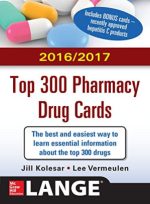
The Essential Flashcards: 2016/2017 Top 300 Pharmacy Drug Cards
In the high-pressure environment of pharmacy school, you do not have time to read a 1,000-page textbook to memorize a single drug dose. You need pure, concentrated facts. 2016/2017 Top 300 Pharmacy Drug Cards (3rd edition) is the ultimate, hyper-efficient study weapon. For pharmacy students (PharmD), nursing students, and pharmacy technicians, this massive deck provides the absolute, uncompromising, high-yield clinical data required to memorize the most heavily prescribed medications in the global healthcare system.
Mastering the Most Prescribed Medications in the World
The core genius of this collection is its ruthless curation. The authors have stripped away thousands of rare, obscure drugs that a student might only see once in a career. Instead, they focus entirely on the “Top 300″—the absolute workhorses of modern medicine (like Lisinopril, Atorvastatin, and Metformin). By forcing the student to master this specific list, the deck ensures that the new clinician will instantly recognize 90% of the prescriptions they encounter on their very first day in a retail or hospital pharmacy.
High-Yield Clinical Data at a Glance
Every single card is a masterpiece of information architecture. The front of the card features the generic and major brand names. The back of the card provides a highly structured, rapid-fire breakdown. It does not waste space on complex molecular theory; it provides the exact mechanism of action, the primary clinical indications (what the drug is actually used for), and the standard starting dosages, allowing for instantaneous recall during a high-stakes clinical exam.
Black Box Warnings and Critical Contraindications
This is a fiercely practical guide to patient safety. The cards heavily emphasize the FDA’s most severe warnings. If a drug carries a “Black Box Warning” for sudden cardiac death or severe fetal malformation, it is highlighted in uncompromising terms. The student is forced to memorize these absolute contraindications, ensuring they never dispense a lethal combination of medications to a vulnerable patient.
Memorizing Complex Drug-Drug Interactions
The cards provide a rigorous, easily digestible breakdown of pharmacology’s greatest nightmare: drug interactions. The authors utilize strict formatting to highlight how a drug is metabolized by the liver (specifically the Cytochrome P450 enzymes). This allows the student to quickly memorize which drugs will violently collide with each other, giving them the knowledge required to confidently call a prescribing doctor and demand a prescription change.
The Ultimate Study Tool for the NAPLEX and PTCE
The final value of this collection is its sheer utility for board exams. These cards are specifically designed to mirror the exact style of questions found on the massive, career-defining NAPLEX (North American Pharmacist Licensure Examination) and the PTCE (Pharmacy Technician Certification Exam), training the student’s brain to retrieve highly specific clinical data under immense time pressure.
Frequently Asked Questions (FAQs)
Are the 2016/2017 cards still accurate?
While the core pharmacology of these classic drugs remains identical, medical students and pharmacists must supplement this older deck with modern updates to ensure they are aware of any new FDA safety warnings or newly approved brand names.
Do the cards include phonetic pronunciations?
Yes, they provide critical phonetic spelling for massive, complex generic names, preventing dangerous miscommunications in the clinical environment.
Who is the primary audience?
It is the absolute, mandatory survival tool for first and second-year pharmacy students (P1/P2) and nursing students preparing for clinical rotations.
Conclusion
Top 300 Pharmacy Drug Cards is the ultimate antidote to academic overwhelm. It proves that memorization does not have to be chaotic. By utilizing the highly structured, clinically focused, and ruthlessly curated data provided in this collection, students can rapidly build the rock-solid pharmacological foundation required to survive their board exams and protect their future patients.